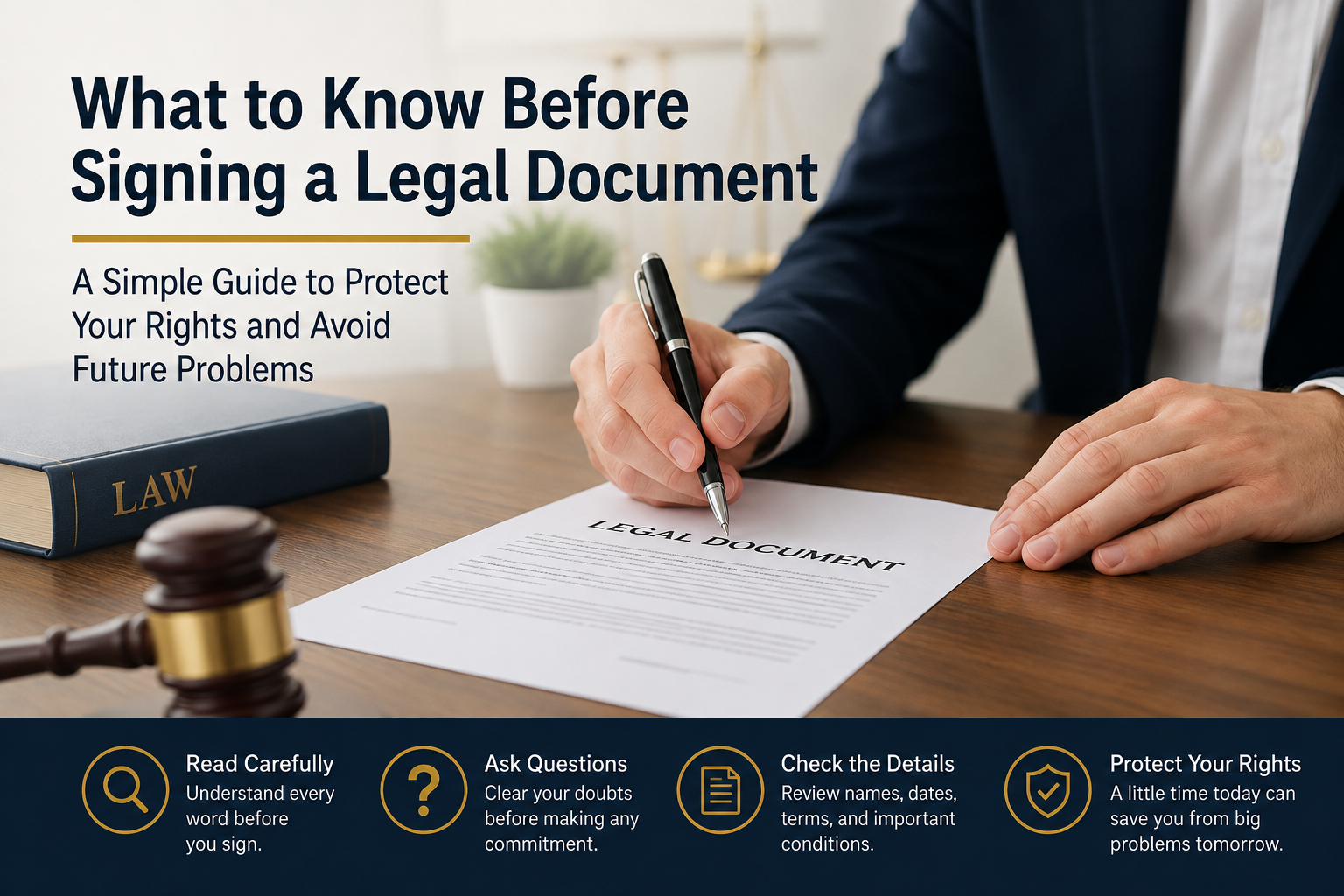
Signing a legal document is something many of us do without giving it enough attention. Sometimes it is a simple agreement, while other times it can involve money, property, employment, business responsibilities, or important personal rights. In my opinion, one of the biggest mistakes a person can make is signing a document simply because someone says it is standard or because they feel pressured to sign quickly.
A signature can create legal responsibilities. That is why it is important to understand what you are agreeing to before putting your name on any document. You do not need to be a lawyer to develop the habit of reading legal documents carefully. You simply need to slow down, ask questions, and understand the important terms.
This guide explains what to know before signing a legal document and the practical steps I believe everyone should take before making a legal commitment.
Read the Entire Legal Document
The first and most important step is to read the entire document. It may sound obvious, but many people only read the first few paragraphs or focus on the section they already understand.
A legal document can contain important information near the end, including termination conditions, penalties, renewal rules, dispute procedures, payment obligations, and other responsibilities.
I believe you should never sign a legal agreement that you have not personally reviewed. Even if another person has explained it to you, reading the document yourself gives you a better understanding of what you are accepting.
Take your time and read every page. If something seems confusing, mark it and ask for an explanation before signing.
Understand What You Are Agreeing To
Reading a document is not enough. You should understand its meaning.
Before signing a contract, ask yourself some basic questions. What am I promising to do? What is the other party promising to do? How much money is involved? When do my responsibilities begin? How long will the agreement continue? What happens if I fail to follow the agreement?
These questions can help you identify the main purpose of the legal document.
For example, an employment agreement may contain information about salary, working responsibilities, working hours, confidentiality, benefits, and termination. A rental agreement may discuss rent, security deposits, maintenance, property rules, and the conditions for ending the tenancy.
Understanding these details can prevent unpleasant surprises later.
Pay Attention to Important Terms
Some parts of a legal document deserve extra attention. Look carefully at dates, amounts, deadlines, responsibilities, and conditions.
Words such as “shall,” “must,” “may,” “unless,” “except,” and “subject to” can change the meaning of a sentence. Legal documents often use precise language, so a small phrase can sometimes have a significant effect on your responsibilities.
You should also look for sections about cancellation, renewal, termination, late payments, penalties, liability, confidentiality, and dispute resolution.
If you do not understand a particular term, do not simply ignore it. Ask the person who prepared the document or seek independent legal advice when necessary.
Check Names and Personal Information
Before signing a legal document, carefully check all personal information.
Make sure your full name is correct. Check addresses, identification details, company names, dates, payment amounts, property descriptions, and other important information.
An incorrect detail may create confusion later. Even if the mistake appears minor, it is better to correct it before signing rather than trying to fix it after the agreement has already been completed.
I personally think this is one of the easiest steps to overlook because people often assume the other party has checked everything. It is safer to check the details yourself.
Never Sign Under Pressure
One of the most important things to know before signing a legal document is that you should be comfortable with the decision.
If someone tells you that you must sign immediately without giving you reasonable time to read the document, consider that a warning sign.
Pressure can make people overlook important information. You may feel uncomfortable asking questions because you do not want to delay the process. However, a few extra minutes of careful reading can be much more valuable than dealing with a legal problem later.
If you need more time to review an agreement, ask for it. If appropriate, take the document home and read it carefully before making a decision.
Ask Questions About Anything You Do Not Understand
There is nothing wrong with asking questions.
Legal documents can contain terminology that an ordinary person may not understand. Instead of pretending that everything is clear, ask for an explanation.
For example, you might ask what a particular fee means, how cancellation works, what happens if a deadline is missed, or who is responsible for a specific obligation.
If the document is complicated or the consequences are significant, speaking with a qualified lawyer can be a sensible decision. Legal advice can help you understand your rights and responsibilities before you become legally committed.
Look for Hidden Costs and Financial Obligations
Money is another area that deserves careful attention.
Do not only look at the main price mentioned in the agreement. Check whether there are additional fees, deposits, taxes, service charges, late payment fees, renewal costs, or other financial obligations.
Sometimes people focus on the amount they expect to pay today and forget about future payments.
Before signing, try to understand the total financial responsibility. If there are payment schedules, make sure you know when each payment is due.
A clear understanding of financial obligations can help you avoid unexpected expenses.
Check the Start Date and End Date
Dates can be extremely important in legal agreements.
Check when the agreement starts and when it ends. If the document automatically renews, understand how and when you can prevent renewal.
Some agreements may require written notice before they can be cancelled. Missing a deadline could result in the agreement continuing for another period.
I recommend writing important dates in your calendar after signing. This simple habit can help you remember deadlines and avoid unnecessary problems.
Understand Cancellation and Termination Rules
Before signing a legal document, find the section that explains how the agreement can end.
Ask yourself whether you can cancel the agreement whenever you want or whether specific conditions apply. Check whether there are cancellation fees or notice requirements.
Also understand what happens if the other party fails to meet its responsibilities.
Knowing the termination rules before signing gives you a clearer picture of your options if circumstances change.
Keep a Copy of the Signed Document
After signing a legal document, always keep a complete copy.
If the agreement is signed electronically, save the final version in a secure location. If it is signed on paper, keep a physical copy and consider making a digital backup.
Do not rely on the other party to provide a copy whenever you need it.
Your copy can become important if there is a disagreement later. It allows you to check exactly what both parties agreed to at the time of signing.
Be Careful With Blank Spaces
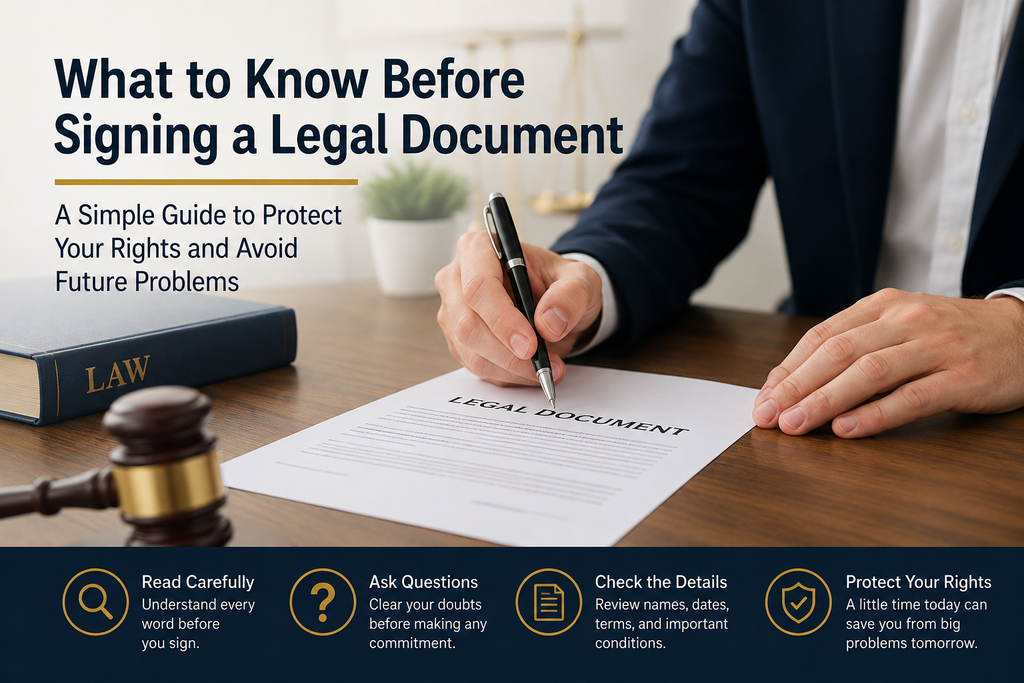
Never sign a legal document that contains important blank spaces that could later be completed without your knowledge.
If a section does not apply to you, ask whether it should be removed or clearly marked as not applicable.
The final version of the document should reflect the agreement you actually intend to make.
It is also useful to check that all pages are included and that there are no missing attachments or referenced schedules.
Understand Attachments and Additional Documents
Sometimes a contract refers to other documents. These may include schedules, policies, terms of service, specifications, payment plans, or other attachments.
Do not assume these documents are unimportant.
If the main agreement says that another document forms part of the contract, you should review that document too. Your responsibilities may depend on information contained outside the main pages.
Make sure you know which documents are included in the final agreement.
Consider Whether You Need Independent Legal Advice
Not every legal document requires a lawyer. Simple agreements may be understandable without professional assistance.
However, I believe professional legal advice is worth considering when the document involves significant money, property, business ownership, employment restrictions, long term obligations, family matters, or other important rights.
An independent lawyer can review the document from your perspective and explain possible risks.
This is especially important when the other party has its own lawyer or when the agreement is complicated.
Do Not Assume Everything Is Standard
People often hear the phrase “This is just a standard contract.”
Even if a document is commonly used, that does not automatically mean every term is suitable for you.
A standard agreement may contain conditions that you do not expect or cannot comfortably accept.
Your circumstances may also be different from those of another person who signed a similar document.
Always focus on the actual document in front of you rather than relying on assumptions.
What I Personally Check Before Signing
If I were reviewing an important legal document, I would focus on several basic areas.
First, I would confirm exactly who the parties are. Then I would check the purpose of the agreement and my responsibilities. After that, I would review the money involved, important dates, cancellation rules, penalties, and any unusual conditions.
I would also check whether the agreement automatically renews and whether I have to provide written notice to end it.
Finally, I would make sure I receive a complete copy of the final signed document.
These simple checks do not replace professional legal advice, but they can help a person become more careful and informed.
Final Thoughts
Knowing what to know before signing a legal document can save you from many avoidable problems. A signature should not be treated as a simple formality. It can represent an important legal commitment.
My biggest advice is simple: slow down before you sign. Read the entire document, understand your responsibilities, check important details, ask questions, and seek professional legal advice when the situation is complicated or financially significant.
Never feel embarrassed about asking for clarification. A responsible decision is better than a rushed decision.
Most importantly, keep a copy of everything you sign and pay attention to important dates and obligations after the agreement becomes effective.
A few minutes of careful review today can help protect your rights and reduce the possibility of serious problems in the future.
Disclaimer: This article is provided for general educational and informational purposes only. It is not legal advice and does not create a lawyer client relationship. Laws and legal requirements can vary by country, province, state, and individual circumstances. If you are dealing with an important legal agreement or are unsure about your rights and obligations, consider consulting a qualified legal professional in your jurisdiction.