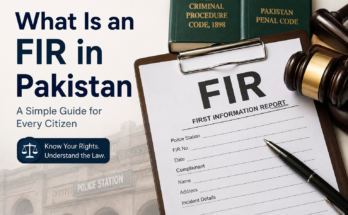
When a person is arrested in Pakistan, one of the first legal terms they or their family usually hear is bail. For someone who has never dealt with the legal system, bail can sound complicated. In simple words, bail is a legal process through which an accused person may be released from custody while the criminal case continues.
In my understanding, the most important thing to remember is that getting bail does not mean that a person has been declared innocent. It simply means that the person is allowed to remain free under certain legal conditions while the investigation or trial continues. The final decision about guilt or innocence is made according to the evidence and the proceedings of the case.
What Is Bail in Pakistan?
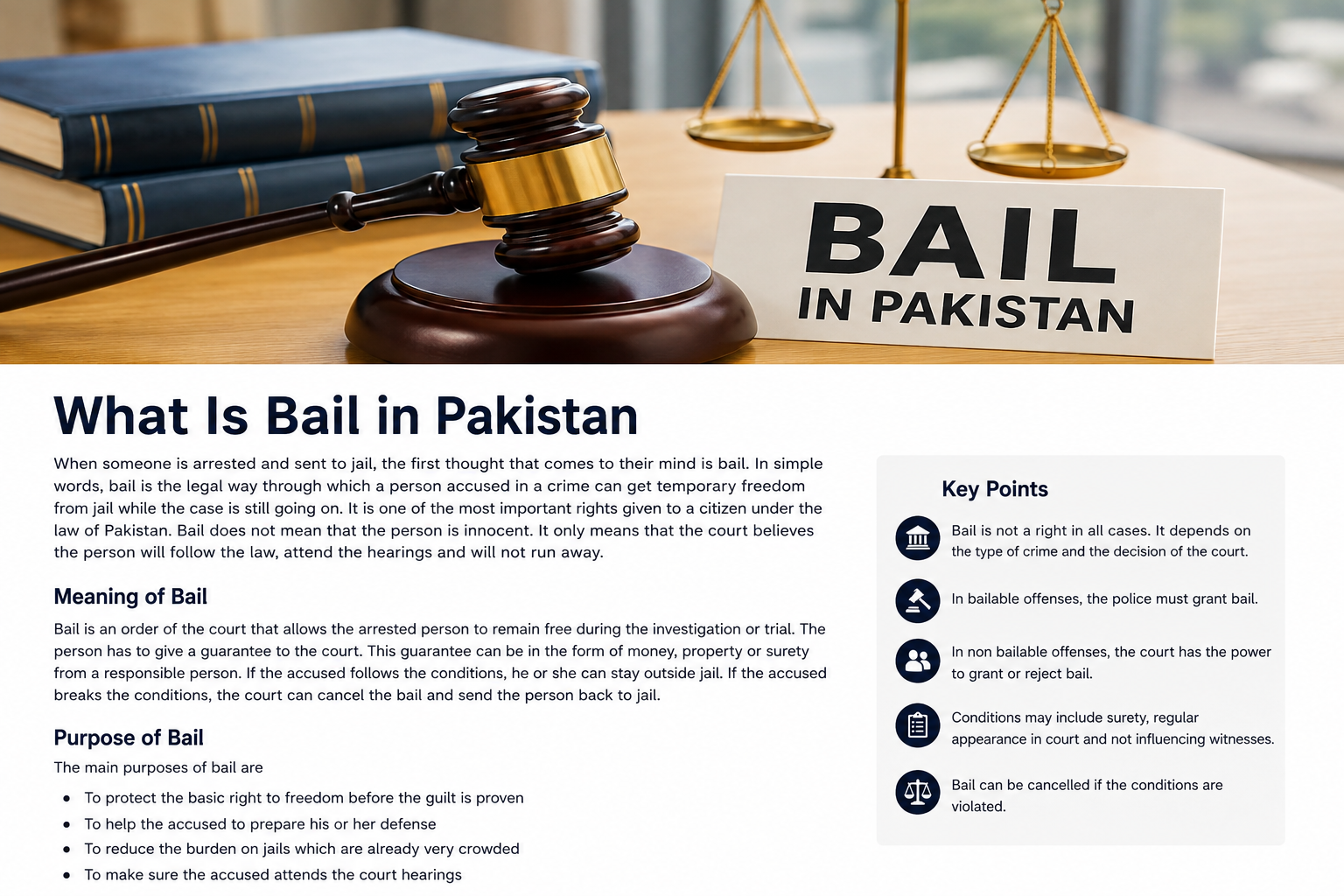
Bail in Pakistan is a legal mechanism that allows an accused person to obtain temporary freedom from custody, subject to conditions imposed by the relevant court or law. Depending on the nature of the offence, bail may be available as a matter of right or may depend on the discretion of the court.
The basic idea behind bail is that a person should not necessarily remain in jail throughout a criminal case simply because an accusation has been made against them. At the same time, the legal system also needs to make sure that the accused appears before the court and does not misuse their freedom.
The Code of Criminal Procedure, 1898, commonly known as the CrPC, contains important provisions dealing with bail in Pakistan. The exact procedure depends on the facts of the case, the offence involved, the stage of the proceedings, and the circumstances of the accused.
Why Is Bail Important?
Bail is important because criminal proceedings can sometimes take time. An accused person may have to face investigation, hearings, evidence, and other legal procedures before the case reaches its conclusion.
In my view, bail provides a balance between two important considerations. On one side, the law needs to protect society and ensure that an accused person does not escape justice. On the other side, a person facing an allegation should have an opportunity to defend themselves without automatically spending the entire period of the case in custody.
Bail can also allow an accused person to communicate with their lawyer, prepare their defence, maintain family responsibilities, and continue ordinary activities subject to the conditions imposed by the court.
Bailable and Non Bailable Offences
One of the most important concepts in understanding bail in Pakistan is the difference between bailable and non bailable offences.
Bailable Offences
In a bailable offence, the law generally provides a stronger entitlement to bail when the required legal conditions are fulfilled. The relevant provisions of the CrPC deal with the release of a person accused of a bailable offence.
This does not mean that every situation is identical. The accused normally has to follow the required procedure and provide the necessary bond or surety according to the law.
Non Bailable Offences
A non bailable offence does not mean that bail is completely impossible. This is a common misunderstanding.
In non bailable cases, bail may still be granted by a competent court depending on the circumstances and the applicable law. The court may consider factors such as the nature of the accusation, available evidence, the circumstances of the accused, the possibility of the accused interfering with the investigation, and the likelihood of appearing before the court.
This is why it is important not to assume that the words “non bailable” automatically mean that the accused must remain in jail until the end of the case.
Pre Arrest Bail in Pakistan
Another important type of bail is pre arrest bail, sometimes called anticipatory bail in general legal discussions.
Pre arrest bail is relevant when a person has a genuine fear of arrest in connection with a criminal case. The person may approach the appropriate court seeking protection according to the applicable legal procedure.
Pre arrest bail can be particularly important where an accused person believes that arrest may be used improperly or that the circumstances surrounding the proposed arrest require judicial protection.
However, pre arrest bail is not simply a way to avoid every lawful arrest. Courts examine the facts and circumstances before granting such relief.
Post Arrest Bail
Post arrest bail in Pakistan applies when the accused has already been arrested and is in custody.
The accused can approach the competent court for release on bail. The court considers the relevant legal provisions and the circumstances of the case.
Factors can include the nature of the offence, the evidence available at that stage, the investigation, the possibility of further custody being necessary, and other circumstances recognized by law.
The decision can vary from case to case because every criminal case has different facts.
Role of the Court in Granting Bail
The court plays an important role in deciding whether bail should be granted in cases where bail is discretionary.
A judge may consider several factors before making a decision. These can include the seriousness of the allegations, the available evidence, the accused person’s conduct, the possibility of influencing witnesses, the possibility of fleeing from justice, and whether continued custody is legally justified.
The court may also impose conditions when granting bail. These conditions are designed to make sure that the accused follows the legal process.
What Is Surety in Bail?
Surety is another important term connected with bail in Pakistan.
A court may require the accused to provide a bail bond or surety according to the circumstances and applicable law. A surety is generally a person who undertakes responsibility in relation to the accused’s compliance with the conditions of bail.
The exact requirements can vary depending on the case and the court’s order. People should therefore avoid relying on general assumptions about the amount or type of surety required.
Conditions of Bail
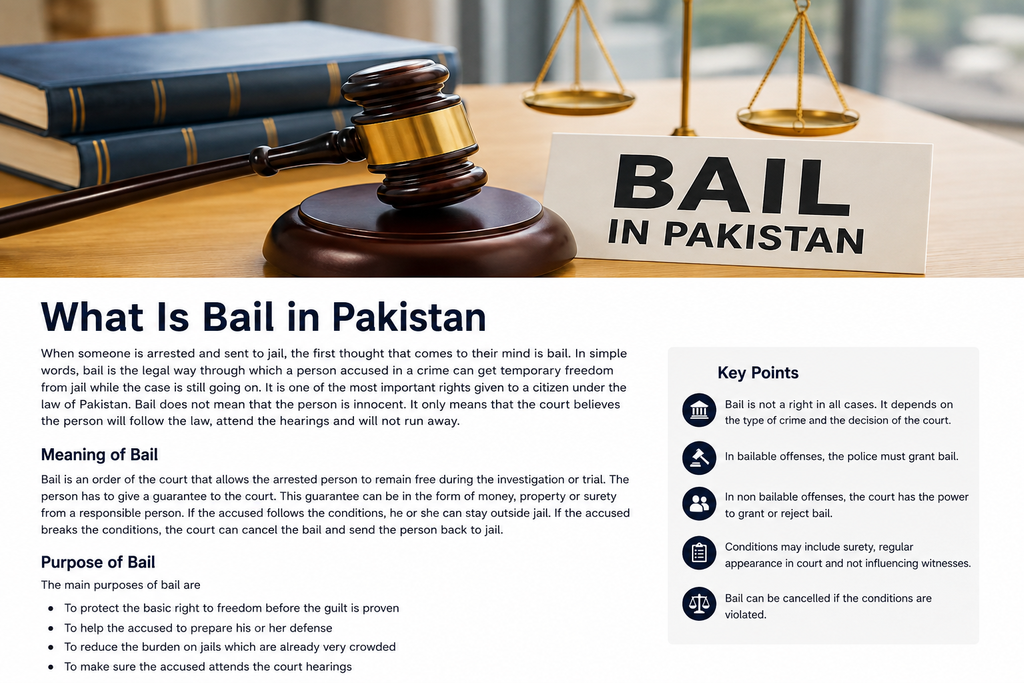
When bail is granted, the accused must follow the conditions imposed by the court or required by law.
One of the most important conditions is usually appearing before the court when required. An accused person should also avoid conduct that could interfere with the investigation or trial.
Depending on the case, the court may impose additional conditions. These could relate to appearance, travel, contact with witnesses, or other matters considered necessary to protect the legal process.
If a person violates the conditions of bail, the prosecution may seek cancellation of bail.
Can Bail Be Cancelled?
Yes, bail can be cancelled in appropriate circumstances.
For example, if an accused person repeatedly fails to appear before the court, attempts to influence witnesses, interferes with the investigation, or misuses the freedom granted by the court, the matter may become relevant to cancellation of bail.
Cancellation is not something that should be taken lightly. Bail is a judicial order, and compliance with its conditions is extremely important.
Bail Does Not Mean Acquittal
This is probably one of the most important points for anyone trying to understand what is bail in Pakistan.
Bail and acquittal are completely different legal concepts.
Bail means the accused has been released from custody under specified legal conditions. Acquittal means the accused has been cleared of the criminal charge through a judicial decision.
Therefore, a person who receives bail is still required to face the criminal proceedings unless the case is otherwise concluded according to law.
Similarly, rejection of bail does not itself mean that the person has been found guilty. The criminal trial and final determination of guilt are separate matters.
Why Legal Advice Matters
Bail cases can become complicated very quickly. The applicable law can depend on the specific offence, the stage of the case, the available evidence, and the court involved.
For this reason, I believe anyone facing arrest or criminal proceedings should obtain advice from a qualified lawyer rather than relying only on general information found online.
A lawyer can review the First Information Report, relevant documents, allegations, investigation status, and other facts before explaining the available legal options.
People should also be careful about websites or individuals promising guaranteed bail. No responsible source can guarantee the result of a court proceeding because judicial decisions depend on the facts and applicable law.
Final Thoughts
In simple terms, bail in Pakistan is a legal mechanism that can allow an accused person to remain outside custody while criminal proceedings continue. It is an important part of the criminal justice system and can help balance individual liberty with the need to ensure that the accused remains available for the legal process.
The difference between bailable and non bailable offences is important, but non bailable does not mean that bail can never be granted. Pre arrest and post arrest bail also serve different situations, and the court may impose conditions when granting bail.
From my point of view, the safest way to understand a bail matter is to look at the actual facts of the case instead of relying on assumptions. Bail is a legal remedy, not a declaration of innocence, and every accused person must continue to follow the requirements of the court.
Anyone dealing with an actual criminal case should consult a qualified Pakistani lawyer for advice based on the current law and the specific circumstances of the case.
SEO Keywords: bail in Pakistan, what is bail in Pakistan, bail procedure in Pakistan, bailable offence in Pakistan, non bailable offence in Pakistan, pre arrest bail in Pakistan, post arrest bail in Pakistan, bail application in Pakistan, bail conditions in Pakistan, surety in bail Pakistan