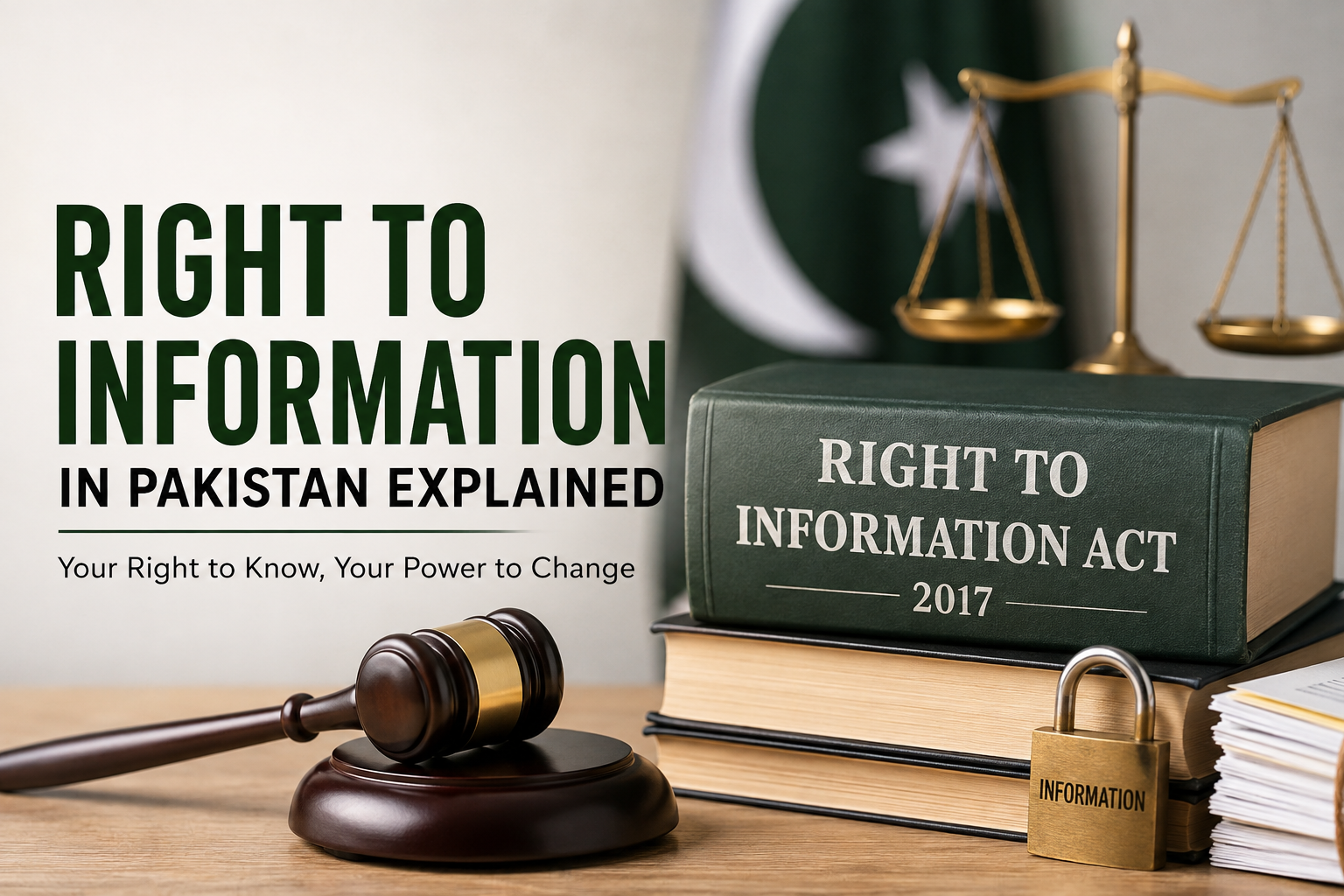
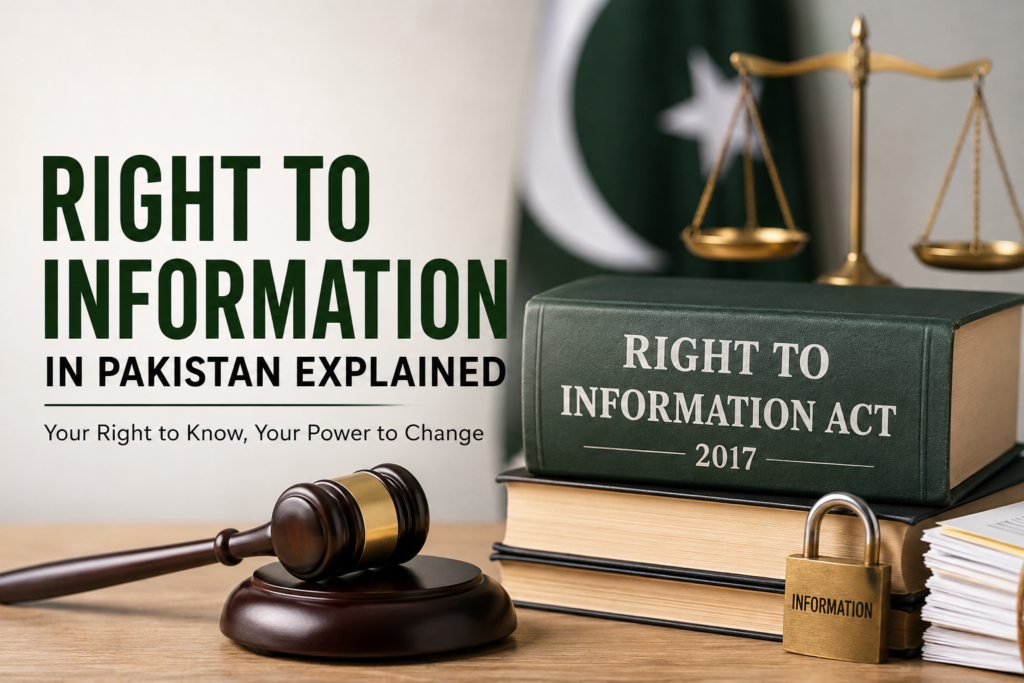
The right to information is an important part of a democratic society because it gives ordinary citizens the ability to know how public institutions work. In Pakistan, this right allows citizens to seek information from public bodies about government decisions, records, policies, spending, and other matters that affect the public.
In my view, the right to information is not simply a legal concept. It is a practical tool that can help people understand how their government works and how public money is being used. When citizens have access to reliable information, they can ask better questions, identify problems, and participate more effectively in public affairs.
Pakistan has constitutional and legal protections for access to information. Article 19A of the Constitution recognizes the right of every citizen to have access to information in matters of public importance, subject to regulation and reasonable restrictions imposed by law. Different laws and information commissions also provide procedures for requesting information from public bodies.
What Is the Right to Information in Pakistan?
The right to information in Pakistan means that citizens can request certain information held by public institutions. The basic idea is simple. If a government department is making decisions or using public resources, citizens should generally have a way to understand what is happening.
This right promotes transparency and accountability. It can help people learn about government policies, development projects, public spending, recruitment processes, administrative decisions, and official records.
However, the right to information does not mean that every government document must automatically be made public. Certain information may be protected for legitimate reasons, such as national security, personal privacy, confidential information, or other matters specifically covered by law.
Article 19A and Access to Information
Article 19A of the Constitution of Pakistan is one of the most important constitutional foundations for the right to information. It states that every citizen has the right to have access to information in matters of public importance, subject to regulation and reasonable restrictions imposed by law.
I believe this constitutional recognition is important because it makes access to information part of the broader system of fundamental rights in Pakistan.
The purpose is not to create unnecessary conflict between citizens and government departments. Instead, it is meant to encourage openness and responsible administration. When people can obtain information through a proper legal process, public institutions have greater reason to maintain accurate records and explain their decisions.
Why Is the Right to Information Important?
The right to information matters because government decisions affect almost every part of daily life. Public institutions manage schools, hospitals, roads, local services, development projects, taxation, public employment, and many other areas.
Without access to information, it can be difficult for citizens to understand how decisions are made.
Transparency can also discourage misuse of public resources. When government records can be requested and reviewed under the law, officials know that their decisions may be examined.
For me, one of the biggest advantages of the right to information is that it gives citizens a peaceful and legal way to ask questions. Instead of relying only on rumors or social media posts, people can seek official information from the relevant public body.
Who Can Request Information?
Generally, citizens can use the right to information framework to request information from relevant public bodies. The exact procedure and scope can vary depending on the applicable law and the institution involved.
Public bodies may include government departments, ministries, offices, authorities, and other institutions covered by the relevant legislation.
This means that a person does not necessarily need to be a journalist, lawyer, politician, or government employee to seek information. Ordinary citizens can also have an important role in promoting transparency.
What Kind of Information Can Be Requested?
The type of information available depends on the relevant law and the public body involved. In general, information requests may relate to matters such as official records, government policies, administrative decisions, development projects, public expenditure, rules, procedures, and other information held by a public institution.
For example, a citizen might want to understand the status of a government development project in their area. They may want to know which department is responsible, what the approved project details are, or what information is available about its implementation.
Another example could involve a public recruitment process. A person may seek information about applicable rules, advertised positions, or official procedures where the law allows access.
The important point is that an information request should be specific and connected to information held by the relevant public body.
How Does an Information Request Work?
The process can vary depending on the province, federal institution, and applicable right to information law. In general, a person submits a request to the relevant public body or designated information officer.
A good request should clearly explain what information is being requested. I think this is one of the most important practical points because a vague request can make it difficult for officials to understand exactly what the applicant wants.
For example, instead of writing, “Give me all information about this project,” it may be better to identify the project name, relevant department, approximate period, and specific records being requested.
The applicant may also need to follow the prescribed procedure, including any applicable fee requirements.
After receiving the request, the relevant authority is expected to process it according to the applicable law. If information is refused or the request is not handled properly, the applicant may have a right to seek review, complaint, or appeal through the relevant mechanism.
Role of Information Commissions
Information commissions can play an important role in enforcing right to information laws. Their exact powers and structure depend on the applicable legal framework.
These bodies can provide an avenue for citizens when a public body refuses access improperly, does not respond within the required period, or otherwise fails to follow the relevant information law.
In my opinion, strong information institutions are essential because having a right on paper is not enough. Citizens also need a practical mechanism through which that right can be exercised.
Right to Information and Government Transparency
Government transparency means that public institutions operate with an appropriate level of openness. The right to information supports this principle by giving citizens a legal route to obtain certain public information.
Transparency can improve public confidence. When people understand why a decision was made and how a public program is being implemented, they may be more willing to trust institutions.
At the same time, transparency should be balanced with legitimate restrictions. Every government system has information that cannot reasonably be disclosed to everyone. The important issue is ensuring that restrictions are based on law and are not used simply to avoid accountability.
Right to Information and Accountability
Accountability is another major reason why the right to information is important in Pakistan.
If public officials make decisions involving public resources, citizens have a legitimate interest in understanding those decisions. Access to information can help journalists, researchers, civil society organizations, lawyers, students, and ordinary citizens examine public administration.
Information alone cannot solve every governance problem. However, it can provide the evidence needed to ask meaningful questions.
For example, if people are concerned about a public project, official records may help them understand its approved scope, responsible department, or implementation status. This can make public discussion more factual and less dependent on assumptions.
Are There Limits on the Right to Information?
Yes. The right to information is not unlimited.
Article 19A itself recognizes that access to information is subject to regulation and reasonable restrictions imposed by law. Specific information laws also contain exemptions and limitations.
Depending on the applicable law, certain information may be protected because disclosure could affect national security, personal privacy, confidential interests, law enforcement, or other legally recognized interests.
These restrictions are important because transparency must be balanced with other legitimate rights and public interests.
In my view, the real goal should be responsible transparency. Information that genuinely belongs in the protected category should remain protected, while information that concerns legitimate public interest should be accessible through the legal process.
Why Citizens Should Understand This Right
Many people know that freedom of expression is a constitutional right, but fewer people understand how important access to information can be.
Knowing the right to information gives citizens another practical way to engage with public institutions.
Students can use public information for research. Journalists can use it to investigate public issues. Researchers can use official records to understand government policies. Citizens can use it to learn more about public services in their communities.
This makes the right to information relevant to everyday life, not just lawyers and government experts.
Challenges in Using the Right to Information
Although the legal framework provides important protections, practical challenges can still exist.
People may not know where to submit a request. Some may not understand which information can legally be requested. Others may find government procedures confusing.
There can also be delays, incomplete responses, or disagreements over whether particular information should be disclosed.
Another challenge is public awareness. A legal right becomes more useful when ordinary people understand how to exercise it.
This is why education about the right to information is important. Citizens should know their basic rights and the proper procedures for using them.
How to Make a Better Information Request
If you want to submit a right to information request, I would suggest keeping it clear, specific, and respectful.
First, identify the correct public body.
Second, clearly describe the information you want.
Third, avoid unnecessary questions that are unrelated to the main request.
Fourth, provide the required contact information and follow the applicable submission procedure.
Finally, keep a copy of your request and any response you receive.
A well prepared request can make the process easier for both the citizen and the public institution.
Right to Information in the Digital Age
Technology has changed the way people access information. Government websites, online portals, digital records, and social media have made public communication faster than before.
However, online information is not always complete or accurate. This is where official information becomes valuable.
The right to information can complement digital government services by providing citizens with a formal legal method for seeking information that may not already be available online.
As Pakistan continues to expand digital public services, access to reliable government information can become even more important.
Final Thoughts
The right to information in Pakistan is an important part of transparency, accountability, and democratic participation. Article 19A of the Constitution provides a constitutional foundation for access to information in matters of public importance, while applicable information laws establish procedures and mechanisms for exercising this right.
From my point of view, the biggest value of the right to information is that it gives ordinary citizens a legitimate way to ask questions about public affairs. It encourages people to become informed rather than relying only on rumors, assumptions, or unverified online claims.
The right to information cannot fix every problem in government, but it can make public institutions more open and citizens more informed. When people understand their rights and use them responsibly, they can contribute to a stronger culture of transparency and accountability in Pakistan.
For anyone interested in Pakistan government information, constitutional rights, public accountability, and citizen participation, understanding the right to information is a useful starting point. It is not simply about obtaining documents. It is about creating a system where citizens can reasonably expect public institutions to operate with openness, responsibility, and respect for the public interest.
Primary SEO Keywords: Right to Information in Pakistan, Right to Information Pakistan, Article 19A Pakistan, RTI Pakistan, access to information in Pakistan, Right to Information Act Pakistan, government transparency in Pakistan
Suggested Meta Description: Learn about the Right to Information in Pakistan, Article 19A, RTI laws, information requests, government transparency, accountability, and citizen rights.
Suggested URL Slug: right-to-information-in-pakistan-explained