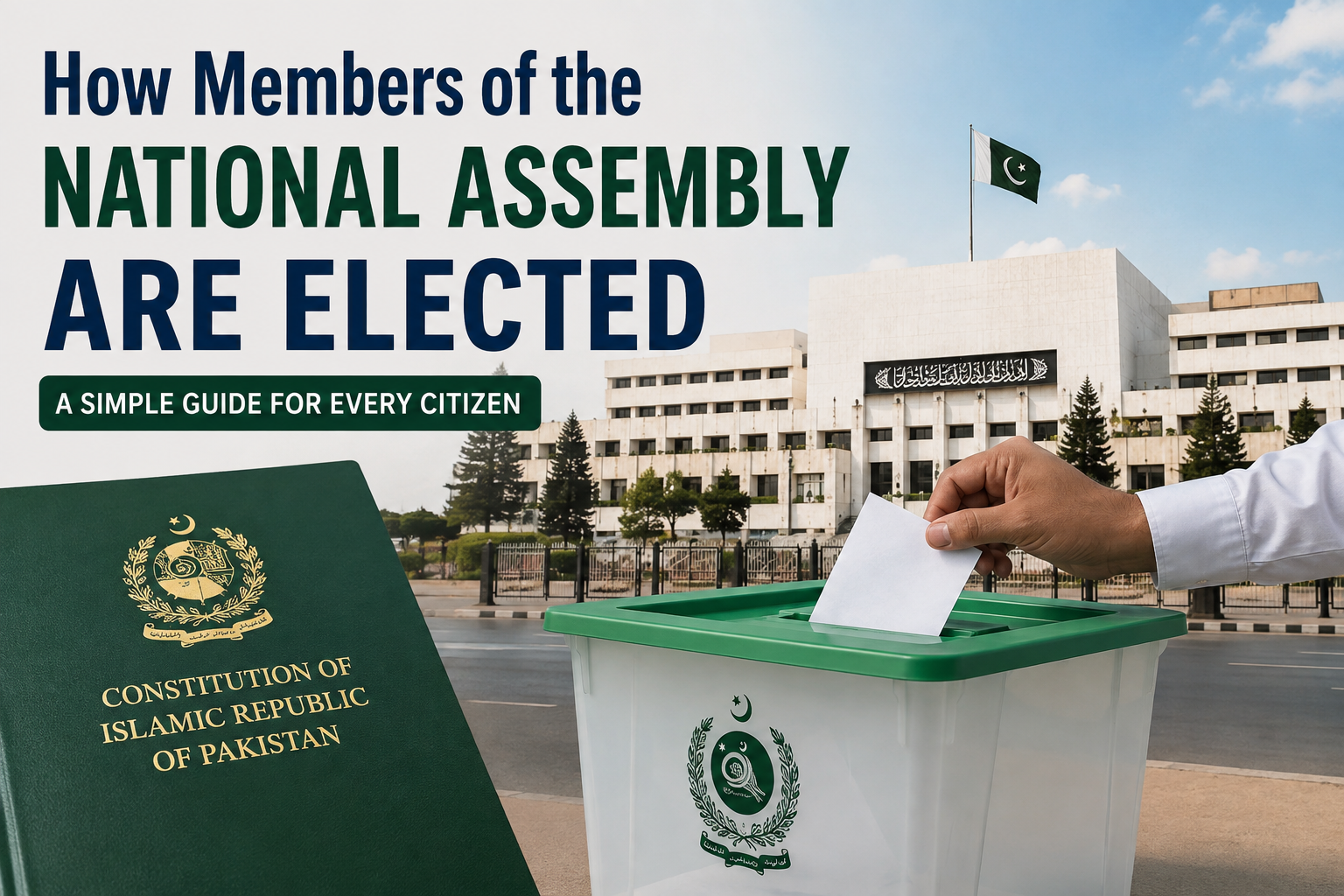
When we talk about democracy in Pakistan, one of the most important questions that comes to mind is how the people who represent us in the National Assembly are actually elected. The National Assembly is an important part of Pakistan’s Parliament, and its members play a major role in making laws, discussing national issues, approving the federal budget, and representing the concerns of citizens.
In my view, understanding the National Assembly election process in Pakistan is important for every citizen because voting is not simply about choosing a name on a ballot paper. It is about choosing representatives who will speak for their constituencies and take part in important national decisions.
What Is the National Assembly?
The National Assembly is the lower house of the Parliament of Pakistan. Its members are elected or selected through the constitutional process established for the Assembly. The National Assembly represents people from different parts of the country and provides a forum where national matters are discussed.
Members of the National Assembly are commonly known as MNAs. They represent constituencies across Pakistan. The general seats are filled through direct elections, meaning eligible voters cast their votes for candidates in their respective constituencies.
There are also reserved seats for women and non Muslim citizens. These seats are filled according to the constitutional and electoral system rather than through the same direct constituency voting process used for general seats.
Who Can Vote in a National Assembly Election?
Before understanding how an MNA is elected, it is useful to understand who can vote.
A person generally needs to be a Pakistani citizen and meet the legal requirements for voter registration and voting. The voter must also be at least 18 years old. Most importantly, the person’s name should be included in the relevant electoral roll.
This is why I believe checking voter registration before an election is a simple but important responsibility. A person may be eligible to vote but still face problems if their information is not properly recorded in the electoral roll.
The Election Commission of Pakistan manages the electoral system and is responsible for conducting elections according to the Constitution and applicable election laws.
How National Assembly Constituencies Work
Pakistan is divided into electoral constituencies for National Assembly elections. Each general seat is connected with a particular constituency.
The boundaries of these constituencies are determined through the delimitation process. Population and other legal requirements are considered when constituencies are formed.
For a voter, the most important point is simple. You normally vote in the National Assembly constituency where you are registered.
Candidates from different political parties can contest these seats, while independent candidates can also participate if they meet the legal requirements.
How Candidates Contest the Election
Political parties nominate candidates to contest National Assembly seats. An individual may also contest as an independent candidate.
Candidates must fulfill the qualifications and legal requirements established under Pakistani law. They also have to submit their nomination papers within the period announced by the Election Commission.
The nomination process is an important part of the election because it determines which candidates are eligible to contest.
After the nomination papers are submitted, the relevant election authorities examine them. Candidates and their nomination papers can also be challenged according to the legal procedure.
Once the final list of candidates is prepared, the election campaign can take place according to the applicable election laws and regulations.
What Happens on Election Day?
Election Day is the stage where ordinary voters directly participate in choosing their National Assembly representative.
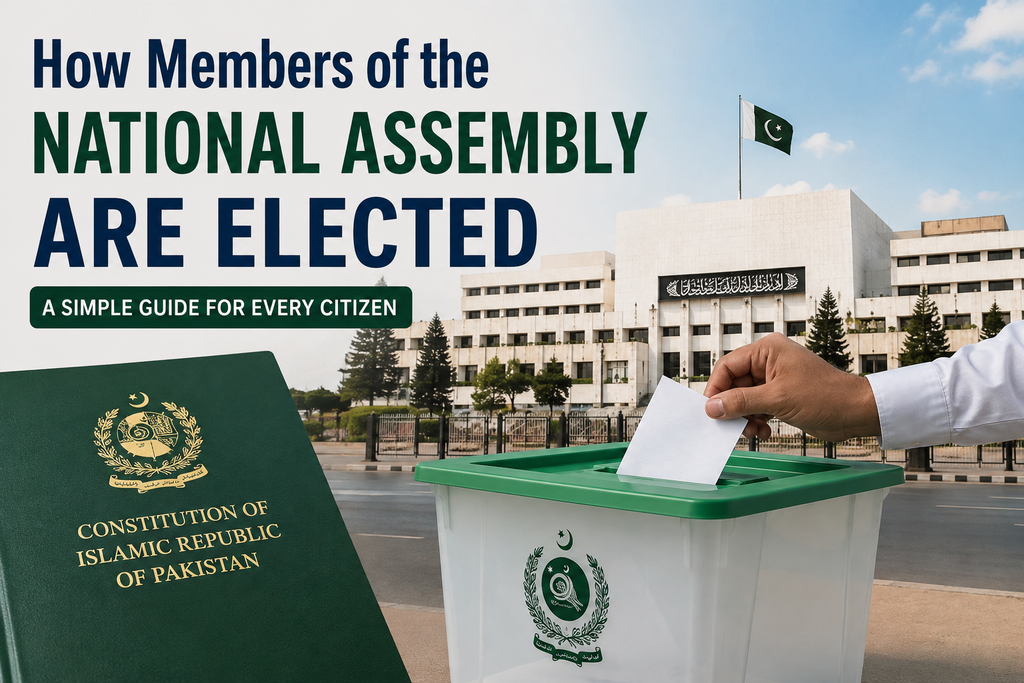
When a registered voter arrives at the assigned polling station, election staff verify the voter’s identity and registration details. The voter is then allowed to cast a ballot according to the prescribed procedure.
The ballot contains the names and election symbols of the candidates contesting the constituency.
The voter marks the ballot for the candidate they want to support and places it into the ballot box.
The important thing is that the vote is intended to be secret. A voter should be able to make a personal choice without pressure from another person.
In my opinion, this secrecy is one of the most important parts of the voting process because every citizen should have the freedom to make an independent political decision.
How Is the Winning Candidate Decided?
For general National Assembly seats, the candidate who receives the highest number of valid votes in the constituency is declared elected.
This means that a candidate does not necessarily need to receive more than half of all votes cast. Instead, the candidate with the highest number of valid votes wins the constituency under the applicable electoral system.
For example, imagine that four candidates contest a National Assembly constituency. If Candidate A receives 45,000 votes, Candidate B receives 38,000 votes, Candidate C receives 25,000 votes, and Candidate D receives 12,000 votes, Candidate A would win because Candidate A received the highest number of votes.
This system makes the individual constituency result extremely important.
What Are Reserved Seats?
The National Assembly also includes reserved seats for women and non Muslim citizens.
These seats are different from general seats because voters do not normally cast a separate direct ballot for an individual candidate for each reserved seat.
Reserved seats are allocated to political parties according to the relevant legal and constitutional formula based largely on the number of general seats won by the parties.
This system is designed to provide representation for groups that might otherwise have lower representation through direct constituency elections.
Understanding reserved seats is important because when people ask how many members are in the National Assembly, they need to consider both general seats and reserved seats.
The Role of Political Parties
Political parties have a major role in National Assembly elections.
A political party may issue tickets to candidates who will contest general seats. Parties organize campaigns, communicate their policies, and ask voters to support their candidates.
However, a voter is not required to vote for a candidate simply because that candidate belongs to a particular party. Voters have the right to make their own decision according to the law.
Independent candidates can also contest elections. If an independent candidate wins a general seat, their position in the Assembly is determined according to the constitutional and electoral framework.
The Role of the Election Commission of Pakistan
The Election Commission of Pakistan has a central role in the election process.
It manages important electoral activities such as election schedules, constituency arrangements, voter lists, polling arrangements, candidate procedures, election results, and other administrative matters.
The Election Commission also works through election officials and polling staff to organize voting at polling stations.
For someone trying to understand how Members of the National Assembly are elected in Pakistan, the Election Commission is one of the most important institutions to know about.
What Happens After Voting?
After polling ends, the votes are counted according to the prescribed procedure.
The results from polling stations are compiled and transmitted through the official election process. The relevant authorities then determine the successful candidates.
Once the official results are finalized and the required legal procedures are completed, successful candidates become members of the National Assembly.
The process does not simply end when a person receives the highest number of votes. There are legal and administrative steps that must be completed before the result becomes officially recognized.
Why National Assembly Elections Matter
National Assembly elections have a direct connection with the way the federal government operates.
MNAs participate in legislation and parliamentary discussions. They can raise issues affecting their constituencies and contribute to debates about national policies.
The National Assembly also has an important role in financial matters, including the federal budget and taxation legislation.
For this reason, I believe voters should look beyond campaign slogans and political personalities when making their decision. It is useful to consider a candidate’s experience, public record, understanding of local issues, political party policies, and ability to represent citizens responsibly.
How Voters Can Make an Informed Choice
Voting is a personal decision, but an informed decision is usually a better decision.
Before voting, I would recommend checking reliable information about the candidates and political parties. Voters can compare their policies, previous work, public statements, and positions on important national issues.
It is also important to avoid believing every claim shared on social media. Election periods often produce a large amount of political information, including rumors and misleading claims.
Official government and Election Commission sources should be preferred when checking election rules, voter information, constituency details, and official results.
Final Thoughts
The process of electing Members of the National Assembly is an important part of democracy in Pakistan. Citizens who meet the legal voting requirements participate directly in choosing representatives for general National Assembly seats.
The process involves voter registration, constituency delimitation, candidate nomination, election campaigns, polling, vote counting, and the announcement of official results. Reserved seats for women and non Muslim citizens are handled through a separate constitutional and electoral mechanism.
In my opinion, learning how Members of the National Assembly are elected helps citizens understand their own role in Pakistan’s democratic system. Voting is not just a day when we visit a polling station. It is a responsibility that allows citizens to participate in choosing the people who will represent them at the national level.
The better we understand the National Assembly election process in Pakistan, the easier it becomes to participate responsibly, evaluate political information, and understand how our vote contributes to parliamentary representation.
Frequently Asked Questions
How are Members of the National Assembly elected in Pakistan?
Members representing general seats are elected directly by voters in their respective constituencies. The candidate receiving the highest number of valid votes in a constituency is declared elected, subject to the applicable legal process.
Can independent candidates contest National Assembly elections?
Yes. Candidates can contest as representatives of political parties or as independent candidates, provided they meet the relevant legal requirements.
Who conducts National Assembly elections in Pakistan?
The Election Commission of Pakistan is responsible for conducting and administering elections according to the Constitution and applicable election laws.
Are all National Assembly members directly elected by voters?
No. General seats are directly elected by voters, while reserved seats for women and non Muslim citizens are allocated through the constitutional and electoral system applicable to those seats.
Why should citizens understand the election process?
Understanding the process helps citizens know how their vote works, how representatives are selected, and how the National Assembly receives its elected membership.