Politics can sometimes feel complicated, especially in Pakistan where elections, political parties, parliament, courts, provinces, and other institutions all play important roles. When I first started looking at politics, I realized that understanding the basic structure makes everything much easier. You do not need to know every political event or remember every politician to understand how politics works in Pakistan.
In simple words, politics is about how decisions are made for the country. It involves choosing representatives, making laws, managing public money, running government departments, and deciding national priorities. In Pakistan, citizens participate in this system mainly through elections, while elected representatives work through different levels of government.
What Is Politics in Pakistan?
Politics in Pakistan is the process through which people and political groups compete for public support and influence government decisions. Political parties present their ideas and programs, candidates contest elections, and voters choose representatives.
Pakistan has a federal parliamentary system. This means power is divided between the federal government and provincial governments, while the parliamentary system gives an important role to elected representatives in forming the government.
The Constitution of Pakistan provides the basic framework for the political system. It explains the powers and responsibilities of major state institutions and establishes the relationship between the federal government and provinces.
For a beginner, the easiest way to understand Pakistani politics is to think about three basic questions. Who makes the laws? Who runs the government? Who represents the people?
How Elections Work in Pakistan
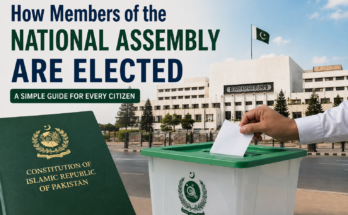
Elections are one of the most important parts of politics in Pakistan. During an election, citizens vote for candidates who want to represent them in legislative assemblies.
The Election Commission of Pakistan is responsible for conducting elections according to the constitutional and legal framework. Political parties nominate candidates, candidates campaign among voters, and citizens cast their votes at polling stations.
At the national level, people elect members of the National Assembly. Provincial elections are used to elect members of provincial assemblies.
The candidate who receives the required winning vote in a constituency becomes its elected representative. Political parties then try to build enough support in the assembly to form a government.
This is why election results matter beyond individual constituencies. The overall balance of seats can determine which political group has the ability to form the government.
What Is the National Assembly?
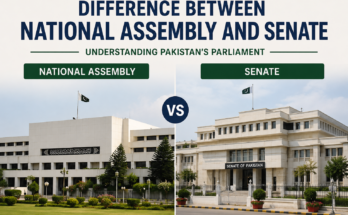
The National Assembly is the lower house of Pakistan’s Parliament. Its members are elected by voters, along with seats reserved for women and non Muslim citizens according to the constitutional system.
One of the most important functions of the National Assembly is making federal laws. Members also discuss national issues, question government officials, debate policies, and approve the federal budget.
The National Assembly also has an important role in selecting the Prime Minister. The political leader who can command the confidence of the majority of members is elected Prime Minister.
This means the Prime Minister is not directly elected by the entire population. Instead, the Prime Minister is elected by members of the National Assembly.
What Is the Senate?
Pakistan also has a Senate, which is the upper house of Parliament. The Senate provides representation to the provinces and helps maintain a balance within the federal system.
Unlike members of the National Assembly, senators are not directly elected by the general public. They are elected through the relevant provincial assemblies and other constitutional arrangements.
The Senate has an important legislative role. Bills generally need to pass through the required parliamentary process before becoming law.
I think the easiest way to remember the difference is that the National Assembly is closely connected with population based representation, while the Senate gives provinces a stronger voice at the federal level.
The Role of the Prime Minister
The Prime Minister is the head of government and leads the federal executive. The Prime Minister works with federal ministers and government departments to implement policies and manage the country’s administration.
The federal government deals with many national matters, including areas assigned to it by the Constitution. It also prepares and presents the federal budget and develops policies on issues under federal authority.
The Prime Minister needs political support in the National Assembly. If the government loses the confidence of the house under the constitutional process, its political position can become difficult.
This is an important feature of parliamentary politics. A Prime Minister needs not only public support but also sufficient support inside Parliament.
What Does the President Do?
Pakistan has a President who serves as the head of state. The President’s role is different from that of the Prime Minister.
In a parliamentary system, the Prime Minister generally leads the government, while the President performs constitutional and ceremonial functions within the powers given by the Constitution.
The President is elected indirectly through an electoral college consisting of members of Parliament and provincial assemblies.
For beginners, the easiest distinction is simple. The President is the head of state, while the Prime Minister is the head of government.
Provincial Politics in Pakistan
Pakistan has four provinces: Punjab, Sindh, Khyber Pakhtunkhwa, and Balochistan. Each province has its own elected provincial assembly and government.
Provincial politics is extremely important because many issues affecting everyday life are handled at the provincial level. These can include areas such as education, health, local administration, agriculture, and other responsibilities assigned by the Constitution and laws.
The Chief Minister leads the provincial government. Members of the provincial assembly elect the Chief Minister.
This means politics does not happen only in Islamabad. Provincial elections can have a direct effect on the services people receive in their communities.
What Are Political Parties?
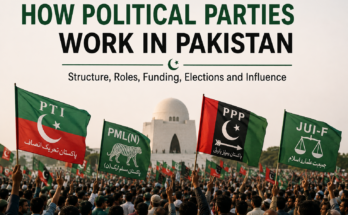
Political parties are groups of people who share political ideas, goals, or interests and want to influence government.
Pakistan has several major political parties as well as regional and smaller parties. Different parties can have different approaches to economic policy, governance, social issues, foreign relations, and development.
Political parties select candidates, organize campaigns, communicate with voters, and try to win seats in national and provincial assemblies.
It is also possible for smaller parties or independent representatives to become important when no single political group has enough seats to form a government alone. In such situations, alliances and negotiations can become an important part of parliamentary politics.
Why Political Alliances Matter
Sometimes one political party wins enough seats to form a government independently. In other situations, no party has a clear majority.
When this happens, parties may work together to create a coalition government. Coalition politics means different political groups agree to cooperate while maintaining their own identities.
This can make politics more complicated, but it is a normal feature of parliamentary systems where multiple parties compete for seats.
Political alliances can change over time because parties may disagree on policies, leadership, or political priorities.
The Role of the Courts
The judiciary is another important part of Pakistan’s political and constitutional system. Courts interpret laws and deal with legal disputes.
The higher judiciary can become involved in constitutional questions, election related disputes, and cases concerning the powers of state institutions.
The Supreme Court of Pakistan is the country’s highest court. The Constitution also provides for the High Courts and other courts.
For someone learning about Pakistani politics, it is important to understand that courts and politicians have different constitutional roles. Political decisions can sometimes become legal questions when disputes involve constitutional rights or legal authority.
Why Parliament Matters
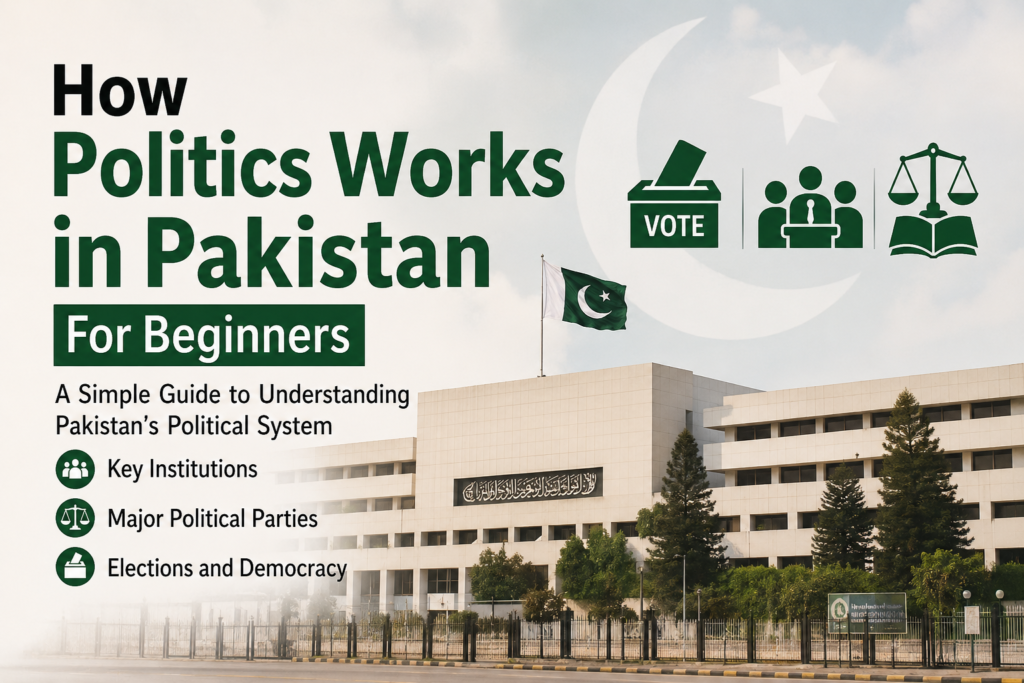
Parliament is important because it provides a forum where elected representatives debate national issues and make laws.
Members of Parliament can raise concerns from their constituencies, discuss government policies, examine legislation, and participate in budgetary processes.
A healthy parliamentary system depends on both government members and opposition members. The government attempts to implement its agenda, while the opposition questions and challenges government decisions.
In my view, this balance is one of the easiest ways to understand democratic politics. Government has the responsibility to govern, while opposition has the responsibility to scrutinize and challenge it.
The Role of the Opposition
The opposition consists of political parties and representatives that are not part of the governing side.
An opposition can criticize government policies, raise public concerns, propose alternatives, and question ministers in Parliament.
A strong opposition is important because political accountability does not end after an election. Once a government takes office, its decisions still need public and parliamentary scrutiny.
This is why understanding the difference between government and opposition is essential for anyone learning how politics works in Pakistan.
How Ordinary Citizens Participate
Politics is not limited to politicians. Ordinary citizens also have an important role.
Voting is one of the most direct ways citizens participate. People can also follow parliamentary debates, discuss public issues, contact elected representatives, participate in peaceful civic activities, and stay informed about government policies.
Social media has also changed political communication. Political parties and politicians can communicate directly with millions of people through online platforms.
However, I believe it is important to check information carefully. Political claims can spread quickly online, and not every statement shared on social media is accurate.
Why Understanding Politics Matters
Understanding politics helps people make better decisions about public issues. It allows us to understand who is responsible for a particular decision and which level of government has authority over an issue.
It also helps voters compare political promises with actual policies and performance.
A person does not need to support any particular political party to understand politics. In fact, learning the basic system can make political discussions more balanced because you can separate institutions, laws, policies, and political opinions.
Final Thoughts
Learning how politics works in Pakistan becomes much easier when the system is broken into simple parts. Citizens vote in elections, representatives enter national or provincial assemblies, political parties compete for power, and governments are formed according to parliamentary support.
The National Assembly and Senate form Parliament at the federal level, while provincial assemblies deal with provincial matters. The Prime Minister leads the federal government, Chief Ministers lead provincial governments, the President serves as head of state, and the judiciary handles legal and constitutional matters within its authority.
For beginners, the most important thing is not to memorize every political name or event. Instead, focus on understanding how elections, Parliament, political parties, government, opposition, provinces, and courts fit together.
Once these basic ideas become clear, following Pakistani politics becomes much easier. You can then look at political news with a better understanding of what is happening, why it matters, and which institution is responsible.
Politics affects laws, public services, economic decisions, development, and many other parts of everyday life. That is why understanding the political system is useful for every citizen, whether you are a first time voter or simply someone who wants to understand Pakistan better.