Receiving a court notice can be a stressful experience, especially if you have never dealt with a legal matter before. When I think about a court notice in Pakistan, I believe the first thing a person should understand is that there is no need to panic. A notice is an official communication connected with a legal case or court proceeding. It usually tells a person about a matter before the court and may require that person to appear, respond, or take a particular legal step.
In Pakistan, court notices can be connected with civil cases, family matters, criminal proceedings, property disputes, business disagreements, and many other legal issues. The exact meaning of a notice depends on the type of case, the court involved, and what the document asks the recipient to do.
In this article, I will explain what a court notice in Pakistan means, why it is issued, what information it normally contains, and what you should do after receiving one.
What Is a Court Notice in Pakistan?
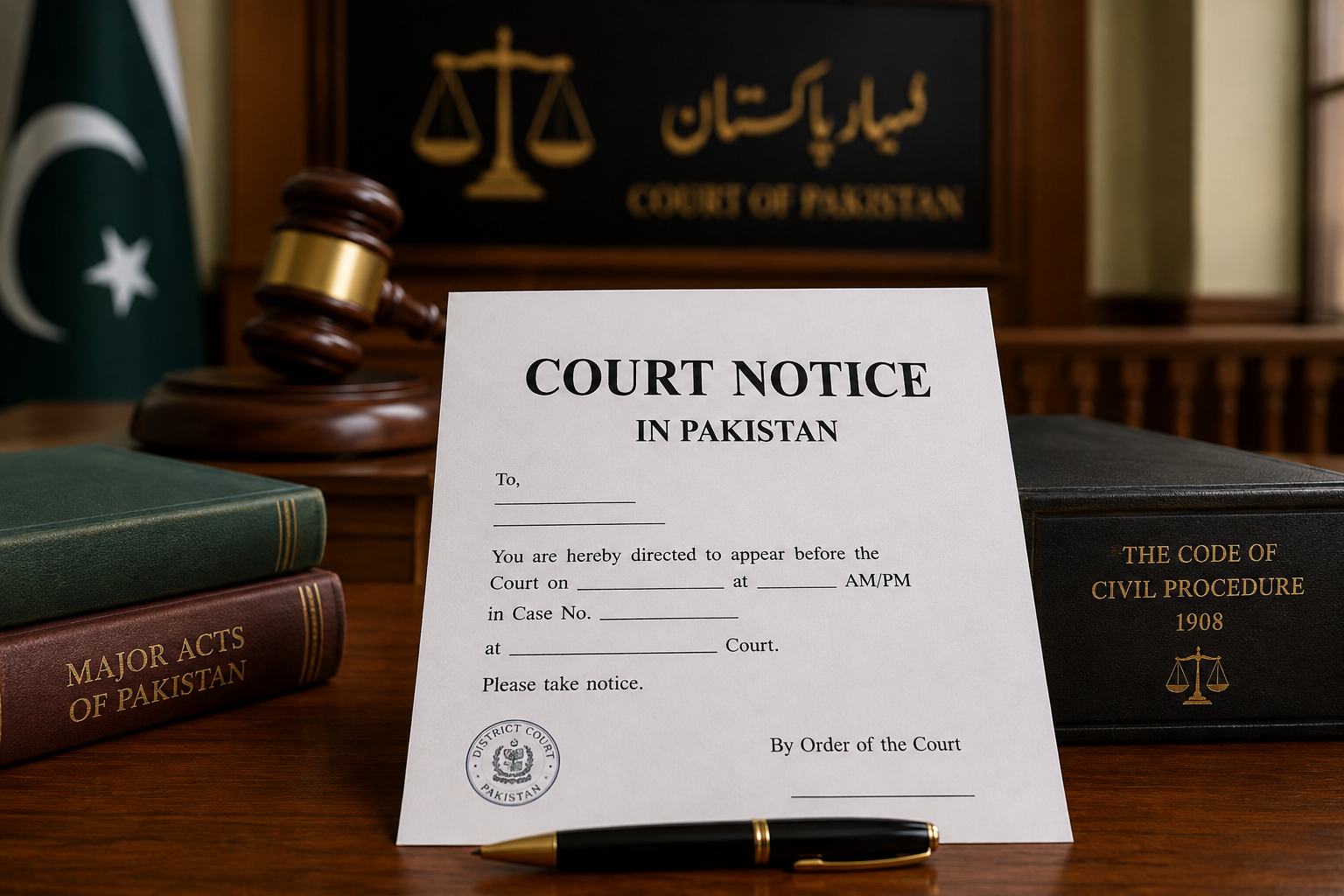
A court notice in Pakistan is an official document used to inform a person that a legal matter involving them is before a court or that their presence or response may be required.
In simple words, the court notice tells you that something related to the legal system requires your attention. It may inform you about a hearing date, a case filed against you, an application made by another person, or another proceeding where your response may be necessary.
A court notice should not automatically be treated as a final judgment. Receiving a notice does not necessarily mean that you have lost a case. In many situations, it simply gives you an opportunity to appear before the court and present your position.
This is why I think people should read the document carefully instead of immediately assuming the worst.
Why Does a Court Issue a Notice?
There can be several reasons for issuing a court notice. The reason depends on the circumstances of the case.
For example, a person may file a civil case concerning money, property, a contract, or another dispute. The court may then issue a notice to the other party so that they are informed about the proceedings.
A notice may also be connected with family matters such as maintenance, divorce, custody, or other family disputes. Similarly, notices can arise in property cases, commercial disputes, banking matters, tenancy disputes, and other legal proceedings.
In some situations, the court may require a person to appear on a particular date. In other situations, the person may be required to submit a response or comply with a particular direction.
The important point is that the purpose of the notice should be understood from the actual document rather than from assumptions.
What Information Is Included in a Court Notice?
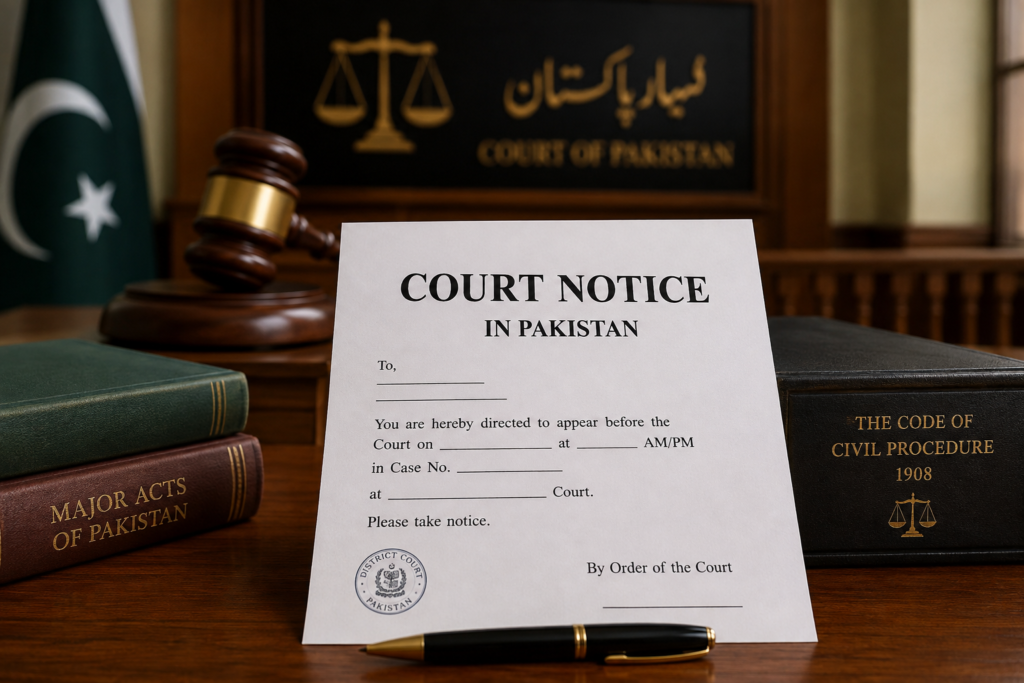
A court notice generally contains important details that help the recipient understand the legal matter.
The document may include the name of the court, case number, names of the parties, nature of the proceeding, hearing date, and instructions concerning appearance or response.
It may also mention the name of the person or party who initiated the proceedings. Depending on the type of matter, there can be additional information about the application, petition, claim, or legal issue.
When I receive or review any legal document, I believe the first thing to check is the case number and court name. These details can make it easier for a lawyer or the relevant court office to identify the matter.
You should also carefully check the date mentioned in the notice. Missing an important date can create unnecessary legal complications.
Is a Court Notice the Same as a Summons?
People sometimes use the words notice and summons as if they mean exactly the same thing. However, their legal meaning can differ depending on the circumstances and type of proceeding.
A summons is generally a formal direction requiring a person to appear before a court or respond to a legal proceeding. A notice is a broader term used for informing a person about a legal matter or a required action.
The wording of the document is therefore important. Instead of focusing only on the title, I would recommend reading the complete document and getting professional legal advice when necessary.
What Should You Do After Receiving a Court Notice?
The first step is to remain calm and read the document carefully. Do not ignore it simply because you believe the claim against you is incorrect.
Write down the court name, case number, hearing date, and the names of the parties. Keep the original document safe and make copies for your records.
The next step should usually be to understand what the case is about. If you do not understand legal terminology, speaking with a qualified lawyer can help you understand your rights and responsibilities.
A lawyer can review the notice, explain the legal position, and advise you about the appropriate response.
If the notice requires you to appear in court, make sure you understand whether your personal appearance is required or whether your lawyer can represent you in the circumstances.
Can You Ignore a Court Notice in Pakistan?
Ignoring a court notice can be risky. I would never recommend simply putting the document aside without finding out what it means.
The consequences of not responding can depend on the type of proceeding and the instructions given by the court. In some cases, the court may proceed in the absence of a party or take another step permitted by law.
This does not mean that every missed notice automatically results in the same consequence. The circumstances matter.
If you have received a notice and missed the date, it is better to contact a lawyer as soon as possible and find out what happened in the case. Delaying the matter can make it more difficult to deal with later.
What If the Information in the Notice Is Wrong?
Sometimes a person may receive a notice containing information they believe is incorrect. For example, the name, address, facts, or description of the dispute may appear inaccurate.
That does not mean the document should be ignored.
Instead, the person should take the document to a lawyer and explain what information is incorrect. The lawyer can examine the court record and determine what legal steps may be available.
It is also important to keep documents that support your position. Depending on the case, these might include agreements, receipts, property documents, messages, correspondence, payment records, or other relevant evidence.
What Happens After a Court Notice?
The next stage depends on the nature of the case.
In a civil matter, the recipient may need to respond to the claim and participate in further proceedings. In a family case, the court may hear the parties and proceed according to the applicable law and procedure.
In criminal matters, the process can be different and may involve specific procedures concerning accused persons, witnesses, investigation, and court appearances.
Because Pakistani courts deal with many different types of cases, there is no single process that applies to every court notice.
This is one reason I believe it is better to avoid taking legal advice from random social media comments or assumptions. A qualified lawyer who has reviewed the actual notice can provide advice based on the specific circumstances.
How Can You Verify a Court Notice?
If you are unsure whether a document is genuine, do not immediately assume that it is authentic.
Look at the court name, case number, parties, date, signatures, stamps, and other information appearing on the document. You can also ask a lawyer to help verify the case details through the appropriate court records or official channels.
If someone sends you a notice through an unusual method and then demands immediate payment or personal information, be particularly careful. Legal documents and communications should be verified before you take action.
Never provide sensitive financial or personal information simply because someone claims to be connected with a court.
Do You Need a Lawyer After Receiving a Court Notice?
Not every legal situation requires the same level of legal assistance. However, if you receive a genuine court notice, consulting a qualified lawyer is often a sensible step.
A lawyer can explain what the notice means, identify the relevant deadlines, review the case documents, and help you understand the available legal options.
This can be especially important when the matter involves property, substantial money, family rights, criminal allegations, or another serious legal issue.
If hiring a lawyer is difficult financially, you can explore whether legal aid or other available assistance is applicable to your circumstances.
Common Mistakes People Make
One of the biggest mistakes is ignoring the notice. Another common mistake is waiting until the last moment before seeking legal advice.
Some people also argue directly with the person who filed the case without understanding the legal consequences of their statements. Others throw away documents because they believe the matter will disappear.
I think keeping proper records is one of the simplest things a person can do. Keep the notice, envelopes, related documents, receipts, agreements, and correspondence in one safe place.
It is also useful to write down important dates so that you do not accidentally forget a hearing or response deadline.
Final Thoughts
A court notice in Pakistan is an important legal communication, but receiving one does not automatically mean that you have lost a case or that the court has decided against you.
The notice is generally intended to inform you about a legal proceeding and, depending on the circumstances, may require you to appear, respond, or take another legal step.
My advice is simple: do not panic, do not ignore the document, and do not make assumptions before understanding what it says. Check the court name, case number, parties, hearing date, and instructions carefully. If you are uncertain about your legal position, speak with a qualified lawyer who can review the actual documents.
Every case is different, and the correct legal response depends on the facts and applicable Pakistani law. This article is intended for general information and should not be treated as a substitute for professional legal advice.
Understanding the meaning of a court notice is the first step toward handling the situation responsibly. Once you know why the notice was issued and what action is expected from you, the situation can become much easier to manage.