If you are involved in a court case in Pakistan, one of the most useful things you can do is check the case status online. In my view, online case tracking has made it much easier for people to stay informed without visiting the court every time they want to know what is happening.
A court case can take time, and there may be several hearings, orders, applications, and other developments before the matter is finally decided. Because of this, knowing how to check case status online in Pakistan can save time and help you understand the current position of your case.
The process is generally simple, but it depends on which court is hearing the case. Different courts and judicial institutions may provide their own online systems. You may need information such as the case number, case year, case type, party name, or other details.
What Is Online Case Status in Pakistan?
Online case status is information about a court case that can be accessed through an official judicial website or online case management system. Depending on the court and available services, the information may include the case number, names of parties, hearing dates, case stage, orders, and other basic details.
I believe this system is particularly helpful for people who cannot visit the court regularly. Instead of depending entirely on someone else for every update, a person can check available information online.
However, online information should be treated as a source of case information rather than a replacement for professional legal advice.
Why Should You Check Your Case Status Online?
There are several reasons why checking your case status regularly can be useful.
First, you can keep track of upcoming hearing dates. Missing a hearing can sometimes create serious problems, so knowing the scheduled date is important.
Second, online case information can help you understand whether a case is still pending or whether there has been a recent development.
Third, it can save time. A person living in another city may not want to travel to court simply to ask about the next hearing date.
Fourth, online records can help you communicate more effectively with your lawyer. If you already know the basic status of your case, you can ask more specific questions.
How to Check Case Status Online in Pakistan
The exact procedure depends on the court where your case is pending. The first step is to identify the correct court.
Pakistan has different levels and types of courts, including the Supreme Court, High Courts, district courts, and other judicial forums. Many courts have developed online systems for case information.
Start by visiting the official website of the relevant court. Avoid relying on random websites or social media pages when looking for important legal information.
Look for an option such as Case Status, Case Search, Online Case Information, Cause List, or a similar service.
Once you open the case search page, you may be asked to enter information about your case.
Information You May Need
Before searching for your case, it is useful to keep your case documents nearby.
The most important information may include your case number and case year. Some systems may also ask for the case type.
For example, the search form may require information such as civil case, criminal case, constitutional petition, appeal, or another category.
Some court websites may provide a search option using the names of the parties. This can be useful if you do not remember the complete case number.
In my opinion, the case number is usually the easiest information to use when it is available because it can make the search more precise.
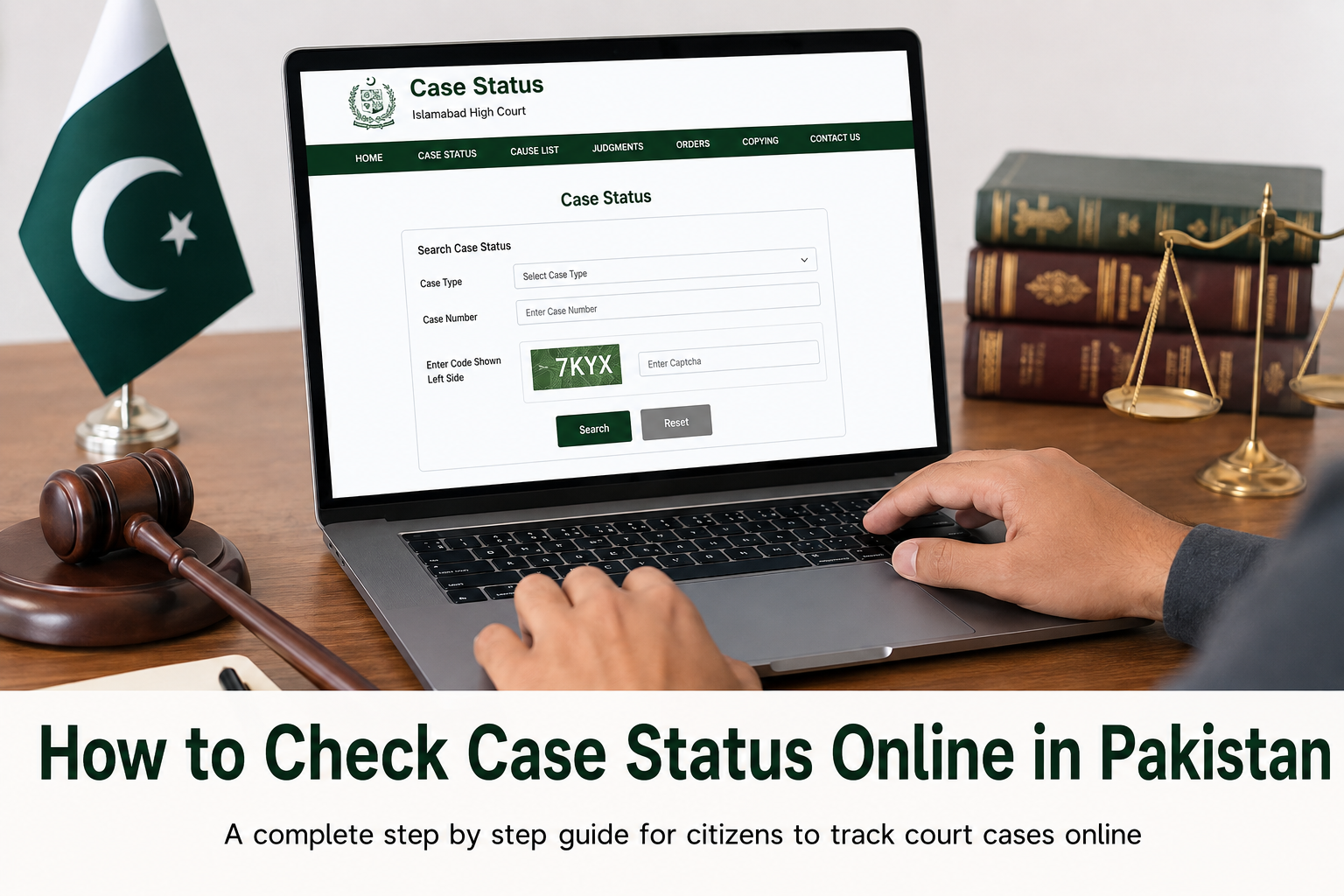
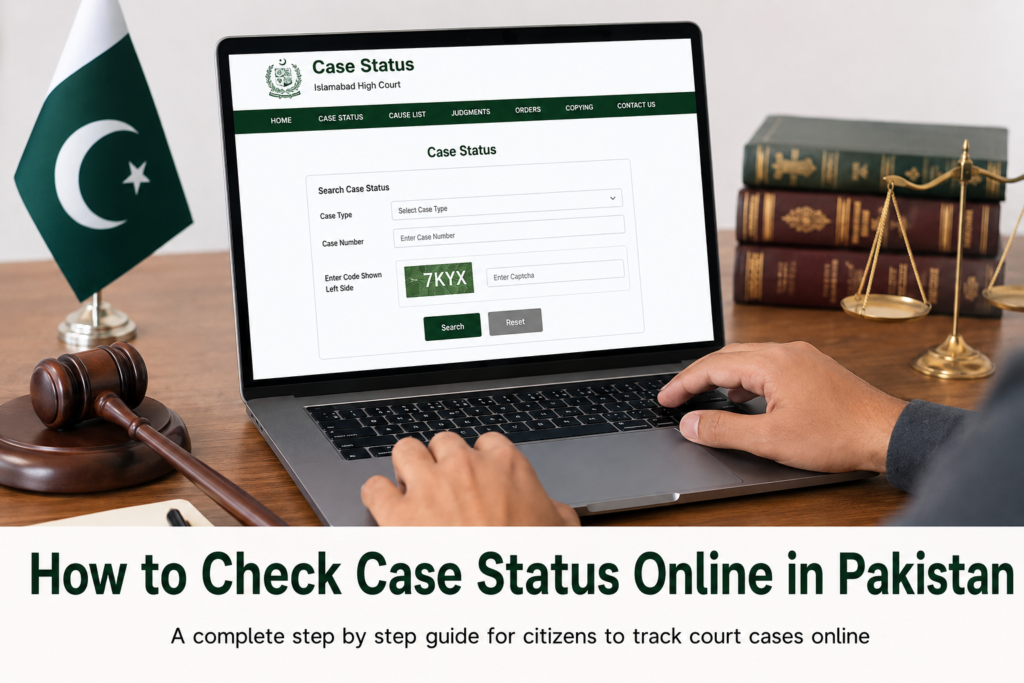
Search by Case Number
If your court website provides a case number search, enter the information carefully.
You may need to select the case type, enter the case number, and select the relevant year. Some websites may also require a verification code.
After entering the information, click the search button.
If the information is correct and the case is available in the online database, you may see details about the case.
The information displayed can vary depending on the court and its online system.
Search by Party Name
Some online court systems allow users to search using the name of a party.
This can be useful when you do not have the case number. However, searching by name may sometimes produce multiple results, particularly when a name is common.
For this reason, I recommend checking other details such as the court, case type, year, and names of the opposing parties before assuming that a result belongs to your case.
Do not rely only on a similar name.
Checking High Court Cases
High Courts in Pakistan provide online information services through their respective official websites.
If your case is pending before a High Court, first identify the relevant High Court. Pakistan has High Courts for different jurisdictions, including the Lahore High Court, Islamabad High Court, Sindh High Court, Peshawar High Court, and Balochistan High Court.
Visit the official website of the relevant court and look for its case search or case status service.
The information and search options can differ between courts, so it is important to follow the instructions displayed on the particular website.
Checking District Court Cases
District and subordinate courts also handle a large number of civil and criminal matters.
Depending on the province and judicial system, online case information may be available through the relevant court or judicial authority.
If you cannot find your case online, do not immediately assume that the case does not exist.
The record may not have been digitized, the information may have been entered differently, or the particular court may not provide complete online information.
In such situations, contacting the court office or asking your lawyer to verify the record may be necessary.
What Does Pending Mean?
One of the most common terms people see when checking a case status is Pending.
Pending generally means that the case has not been finally disposed of and remains before the court.
A pending case may have many different stages. It could be waiting for arguments, evidence, a response from another party, an order, or a future hearing.
Therefore, seeing the word Pending does not tell you everything about the case.
If you want to understand the exact stage, you should look at the latest available order or ask your lawyer for an explanation.
What Does Disposed Mean?
Another term you may see is Disposed.
Generally, a disposed case is one that has been concluded by the court in some manner. The exact result can vary.
A case may be decided, dismissed, withdrawn, transferred, or concluded for another legal reason.
Therefore, I would not recommend assuming that disposed automatically means that one particular party won.
The actual court order is more important for understanding what happened.
How to Check the Next Hearing Date
The next hearing date is one of the most useful pieces of information when checking a court case online.
If the online system provides this information, look for fields such as Next Date, Hearing Date, or Date of Hearing.
Always verify the date carefully.
Court schedules can sometimes change because of administrative reasons, adjournments, holidays, or other circumstances. If the matter is important, it is sensible to confirm the information with your lawyer or the relevant court office.
What If You Cannot Find Your Case Online?
Do not panic if your case does not appear in an online search.
First, check whether you entered the case number correctly. Make sure the case year and case type are also correct.
You can then try searching by party name if that option is available.
If the case still does not appear, check whether you are using the correct court website.
Another possibility is that the case record has not yet been updated or digitized.
In such circumstances, your lawyer or the relevant court office may be able to provide more reliable information.
Is Online Case Status Always Accurate?
Online case status is useful, but I would not treat it as the only source of information in an important legal matter.
Court websites can contain information that is updated at different times. There may also be technical issues or delays in uploading orders and hearing information.
For this reason, online case tracking should be viewed as a convenient way to monitor your case rather than a substitute for official documents.
If you need to make an important legal decision, consult your lawyer and verify the relevant court order.
Tips for Checking Case Status Safely
When checking your case online, always use the official court website whenever possible.
Avoid entering sensitive personal information into unknown websites.
Keep a record of your case number and important hearing dates.
Take note of recent orders and developments.
If the information online conflicts with information provided by your lawyer or appears unusual, verify it before taking any action.
It is also a good idea to understand the difference between a case status, a cause list, and a court order. These are related but are not necessarily the same thing.
Final Thoughts
In my opinion, knowing how to check case status online in Pakistan is an important skill for anyone involved in a court matter. Online judicial services can make it easier to follow hearing dates, case progress, and other publicly available information without repeatedly visiting the court.
The most important thing is to use the correct official court website and enter your case information carefully. Your case number, case year, case type, and party names can all help you locate the correct record.
At the same time, online information should not replace proper legal advice. If you do not understand a court order or are unsure about the next step in your case, speak with a qualified lawyer.
For me, the biggest advantage of online case tracking is convenience. It gives people a simple way to stay informed and take a more active interest in their legal matters. When used carefully and together with professional legal guidance, online case status services can be a valuable resource for people dealing with the Pakistani court system.
Important Note: Court websites and online services can change their search methods and available information. Always verify important legal information through the relevant court or a qualified legal professional.