Political parties are one of the most important parts of the democratic system in Pakistan. When we talk about elections, governments, the National Assembly, provincial assemblies, or political leadership, political parties are usually at the center of the discussion. In my view, understanding how political parties work in Pakistan is important for anyone who wants to understand Pakistani politics and government.
A political party is basically an organized group of people who share certain political ideas, goals, or interests and want to participate in the political process. Political parties select candidates, campaign during elections, communicate with voters, form governments, sit in opposition, and influence public policy.
Pakistan has a multi party political system. This means that several political parties can participate in elections and compete for public support. Some parties have a strong presence across the country, while others are particularly influential in specific provinces or regions.
What Is a Political Party in Pakistan?
A political party is an organized political group that seeks to participate in elections and influence the direction of government. Parties normally have leadership structures, members, workers, offices, policies, and election strategies.
In Pakistan, political parties can represent different political viewpoints and regional interests. Some focus on economic development, some emphasize social welfare, some highlight religious or ideological issues, and others have strong regional identities.
Political parties also provide voters with choices during elections. Instead of every candidate standing completely alone, candidates can contest elections under the identity and election symbol of a political party, subject to the applicable election laws and rules.
How Political Parties Are Organized
The internal structure of a political party can vary, but most established parties have a leadership system. At the top, there may be a party head, chairman, president, secretary general, or other senior office bearers.
Below the central leadership, parties may have provincial, divisional, district, tehsil, and local level organizations. These structures help parties communicate with supporters and organize political activities.
Party workers are also very important. They help arrange meetings, communicate with voters, organize campaigns, distribute political information, and support candidates during elections.
In my opinion, a strong local organization can make a major difference during an election because politics is not only about speeches by senior leaders. It also depends on how effectively a party connects with ordinary people.
How Political Parties Choose Candidates
One of the most important jobs of a political party is selecting candidates for elections. Parties usually consider several factors when deciding who should contest a constituency.
These factors can include political experience, local popularity, public support, organizational strength, previous election performance, and the candidate’s relationship with local communities.
Candidate selection can sometimes become controversial because several people may want the same party ticket. A party has to make a decision about which candidate has the best chance of winning the constituency.
Independent candidates can also contest elections, but party backed candidates usually benefit from the party’s organizational network, campaign resources, workers, and political identity.
Political Parties and Elections
Elections are one of the main ways political parties seek public support. Before an election, parties prepare campaigns to explain their policies, criticize opponents, introduce candidates, and persuade voters.
Election campaigns can include public meetings, speeches, television appearances, social media campaigns, posters, meetings with community groups, and door to door political activity.
The Election Commission of Pakistan plays an important role in the electoral process. Political parties and candidates have to follow the relevant constitutional, legal, and electoral requirements.
During elections, voters cast their ballots for candidates. Candidates who receive the required number of votes in their constituencies can win seats in the relevant assembly.
How a Political Party Forms a Government
Winning an election does not always mean that one political party controls the entire government. Pakistan has a parliamentary system, so the ability to form a government depends on having sufficient support in the relevant legislature.
After general elections, political parties and independent members may work together to establish a parliamentary majority. A party or group with enough support can form the government according to the constitutional process.
At the federal level, the Prime Minister leads the government. At the provincial level, a Chief Minister leads the provincial government.
Political parties therefore play a central role in deciding who has the parliamentary support necessary to govern.
What Happens When a Party Is in Opposition?
A political party does not have to be part of the government to remain important. Parties that do not form the government can serve as opposition parties.
The opposition has an important democratic responsibility. It can question government decisions, criticize policies, raise public issues, participate in parliamentary debates, and propose alternative ideas.
In my view, a responsible opposition is just as important as a responsible government. Democracy works better when government decisions can be questioned and publicly discussed.
Opposition parties can also prepare for the next election by presenting themselves as an alternative government.
Political Parties and Parliament
Political parties have a major influence inside Parliament. Members elected under a party usually work within the broader political strategy of their party.
Party leadership may decide what position the party will take on important legislation, votes, and political issues. Parliamentary party meetings can be used to discuss strategies and coordinate members.
However, Parliament is not simply a place where party leaders give instructions. Members of Parliament also represent their constituencies and participate in debates about national issues.
The relationship between individual lawmakers and their political parties is therefore an important part of parliamentary politics in Pakistan.
Political Parties and Public Policy
Political parties also influence government policies. Before elections, parties may publish manifestos explaining what they intend to do if they receive public support.
A manifesto can cover areas such as education, health, employment, taxation, agriculture, industry, infrastructure, governance, and foreign relations.
Once a party becomes part of government, turning promises into practical policies can be challenging. Economic conditions, available resources, administrative capacity, legal requirements, and political circumstances can all affect implementation.
This is why I believe voters should look not only at election speeches but also at a party’s policies, past performance, and ability to implement its promises.
Political Parties and Political Campaigns
Modern political campaigning in Pakistan has changed significantly because of television, websites, and social media.
Political parties use platforms such as Facebook, YouTube, X, Instagram, and other digital channels to communicate directly with voters. Social media allows political messages to reach millions of people quickly.
At the same time, digital politics creates challenges. Political misinformation, misleading claims, edited videos, and unverified information can spread rapidly.
For this reason, I think voters should check political claims through reliable sources before accepting them as facts.
How Political Parties Are Funded
Political parties need financial resources to operate. They may have expenses related to offices, staff, political activities, communication, election campaigns, travel, and organizational work.
Political party funding is subject to legal requirements and rules. Parties are expected to comply with applicable laws regarding their finances, records, reporting, and sources of funding.
Financial transparency is important because political parties have a significant influence on government and public decision making. Citizens should be able to have confidence that political organizations are operating within the law.
Why Political Parties Matter to Ordinary Citizens
Political parties may appear to be focused mainly on politicians and elections, but their decisions can affect ordinary people directly.
Government policies can influence electricity, taxation, education, healthcare, employment, agriculture, transportation, business, and public services.
When citizens vote for political candidates, they are also participating in the broader political competition between parties.
For me, this is one of the most important reasons to understand political parties in Pakistan. Political awareness helps people make more informed decisions instead of simply following slogans or personalities.
Major Political Parties in Pakistan
Pakistan has many political parties, and their influence can change over time. Some parties have developed strong national organizations, while others have greater influence in particular provinces or regions.
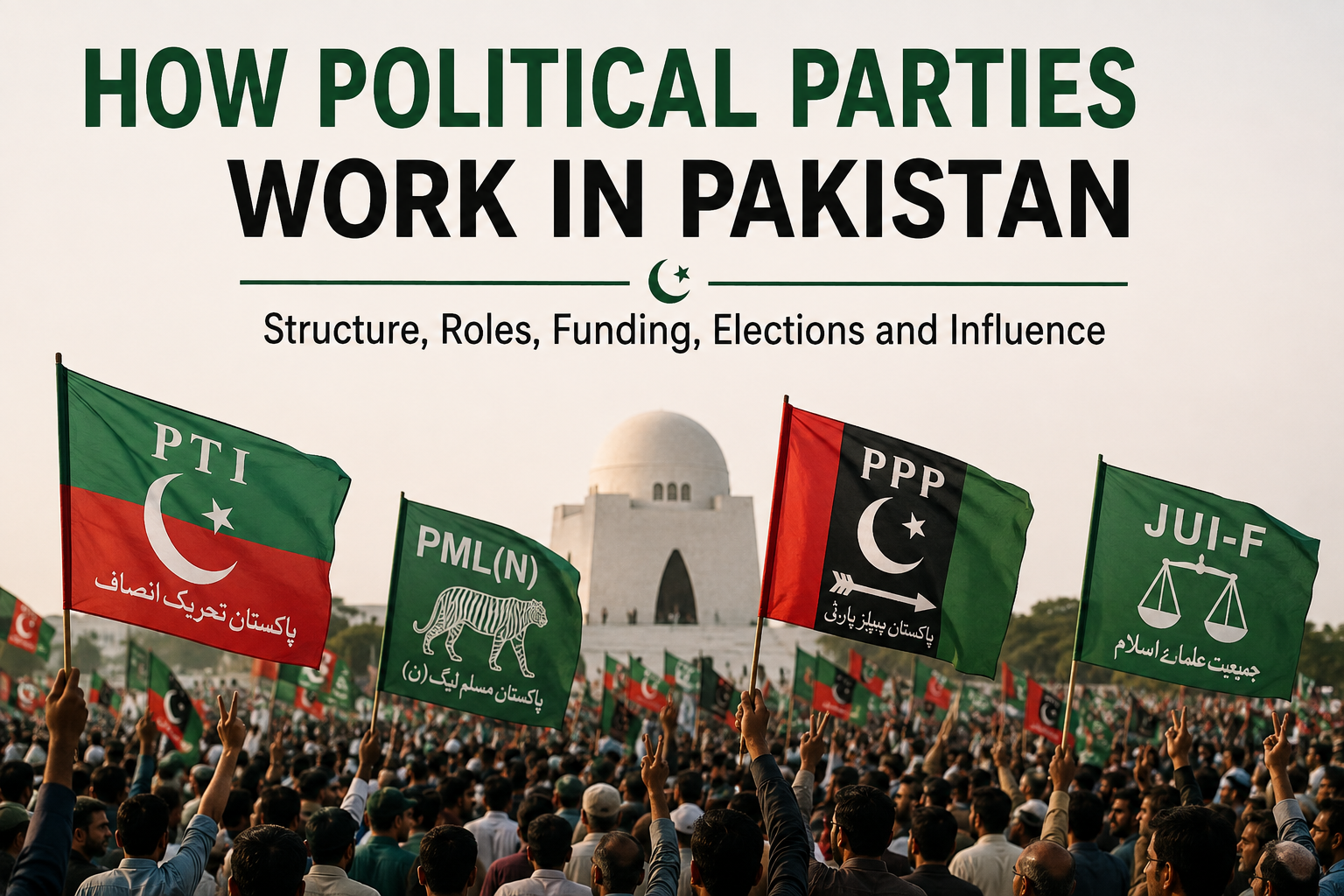
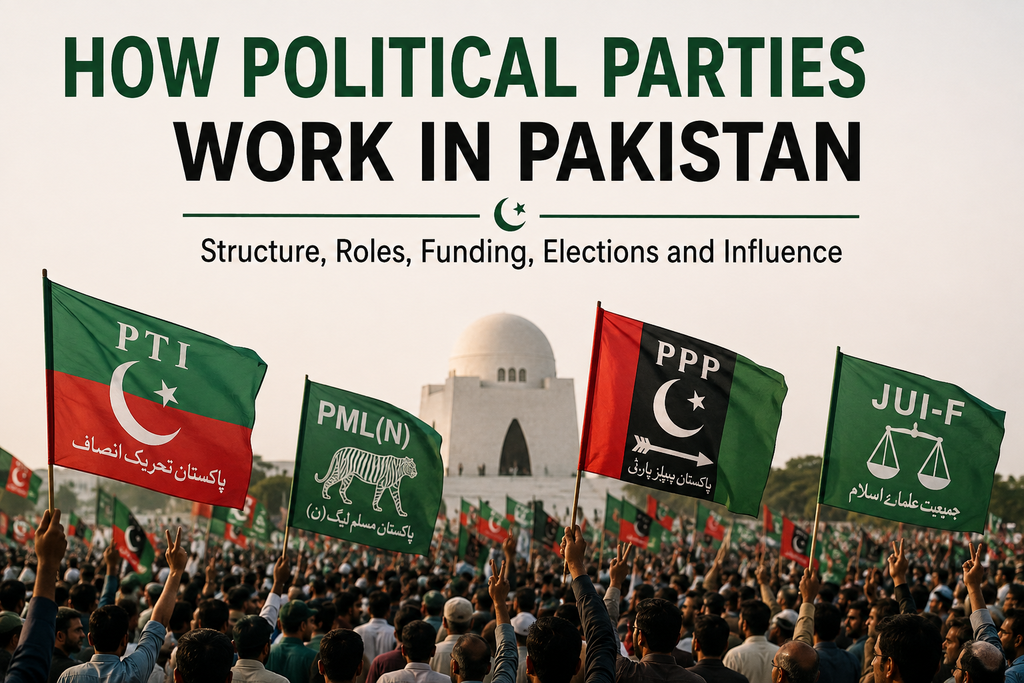
Among the well known political parties are the Pakistan Muslim League Nawaz, Pakistan Peoples Party, Pakistan Tehreek e Insaf, Muttahida Qaumi Movement, Jamiat Ulema e Islam and several other national and regional parties.
The political strength of these parties can change from one election to another. A party that performs strongly in one election may face different circumstances in the next election.
This changing political environment is one of the reasons Pakistani politics remains highly competitive.
Role of Political Parties in Democracy
Political parties connect citizens with government. They provide political platforms, organize candidates, develop policies, and give voters different choices.
A healthy democratic system needs political competition, peaceful political participation, internal organization, and respect for constitutional processes.
Political parties also have a responsibility to promote political awareness and encourage citizens to participate peacefully in democratic activities.
At the same time, parties should be open to criticism. No political party should be treated as perfect. Voters should evaluate political organizations based on their ideas, performance, leadership, policies, and conduct.
Conclusion
Political parties are a fundamental part of how democracy and parliamentary government work in Pakistan. They organize political activity, select candidates, contest elections, form governments, serve as opposition, participate in Parliament, and influence public policy.
From my point of view, understanding how political parties work helps us understand much more than elections. It helps explain how political leadership is developed, how governments are formed, how laws are debated, and how citizens can influence the direction of the country.
For anyone interested in Pakistani politics, the best approach is to look beyond political slogans and personalities. Understanding party structures, election processes, manifestos, parliamentary roles, and government performance can help create a more informed view of politics.
Political parties will continue to play a central role in Pakistan’s democratic system. Their effectiveness ultimately depends not only on their leaders but also on their connection with citizens, respect for democratic institutions, and ability to turn political promises into practical results.
SEO Keywords: political parties in Pakistan, how political parties work in Pakistan, political party system in Pakistan, Pakistan political parties, political parties and elections in Pakistan, role of political parties in Pakistan, Pakistani politics, political system of Pakistan, how political parties form government, political parties in democracy.