When people hear the word FIR in Pakistan, they often connect it with a police case, an arrest, or a serious legal problem. However, many people are not fully aware of what an FIR actually means, when it is registered, who can report it, and what happens after it is registered.
In my view, understanding the basic concept of an FIR is important for every citizen because a police complaint can become an important part of a criminal case. FIR stands for First Information Report. It is the formal record of information given to the police about a cognizable offence.
Under Section 154 of the Code of Criminal Procedure, 1898, information about a cognizable offence given to the officer in charge of a police station must be reduced to writing, read over to the person giving the information, and signed by that person. The information is then entered into the prescribed police record.
What Does FIR Mean in Pakistan?
An FIR is a First Information Report registered by the police when information is received about a cognizable offence. In simple words, it is the initial official record of a reported crime.
For example, if someone reports robbery, serious assault, theft, kidnapping, or another offence for which police have the authority to take action according to law, the information may form the basis of an FIR.
An FIR does not mean that the person named in it has already been proven guilty. This is one of the most important points to understand. An FIR starts the criminal investigation process. The police investigate the allegations and collect relevant evidence before the matter proceeds further according to law.
Punjab Police also explains that an FIR is an account of a cognizable offence entered into the police station record. The department states that a person can report a matter orally or in writing and should receive a certified copy of the FIR.
Who Can Register an FIR?
A person who has information about a cognizable offence can approach the relevant police station to report the matter. The person does not necessarily have to be the direct victim in every situation.
For example, if someone witnesses a serious crime, that person may report the information to the police. Similarly, a family member may report certain incidents when the victim is unable to do so.
The report should contain accurate information about the incident. I believe this is especially important because incorrect information can create unnecessary problems during an investigation.
When making a report, it is useful to explain what happened, where it happened, when it happened, who was involved if known, and what relevant evidence or witnesses may exist.
What Is a Cognizable Offence?
The term cognizable offence is important when understanding an FIR.
A cognizable offence is generally an offence for which the police have legal authority to take action and investigate according to the applicable law. Section 154 of the Code of Criminal Procedure specifically deals with information relating to cognizable cases.
Not every complaint automatically results in an FIR. For non cognizable offences, Section 155 provides a different procedure and refers the informant to the Magistrate.
This difference is one reason why people should not assume that every written application submitted to a police station is automatically an FIR.
How to Register an FIR in Pakistan
The basic process begins by approaching the relevant police station and reporting the incident.
The information may be given orally or in writing. According to Section 154, when information about a cognizable offence is given orally, the police officer must reduce it to writing. The information should then be read to the informant, signed by the person giving it, and entered into the relevant police record.
I would recommend keeping the explanation simple and factual. Avoid adding assumptions, rumors, or information that you cannot support.
It is also useful to keep copies of documents related to the incident. Depending on the situation, these might include photographs, messages, transaction records, medical documents, or information about witnesses.
The exact procedure can vary according to the circumstances and the relevant provincial police system.
What Information Is Usually Included in an FIR?
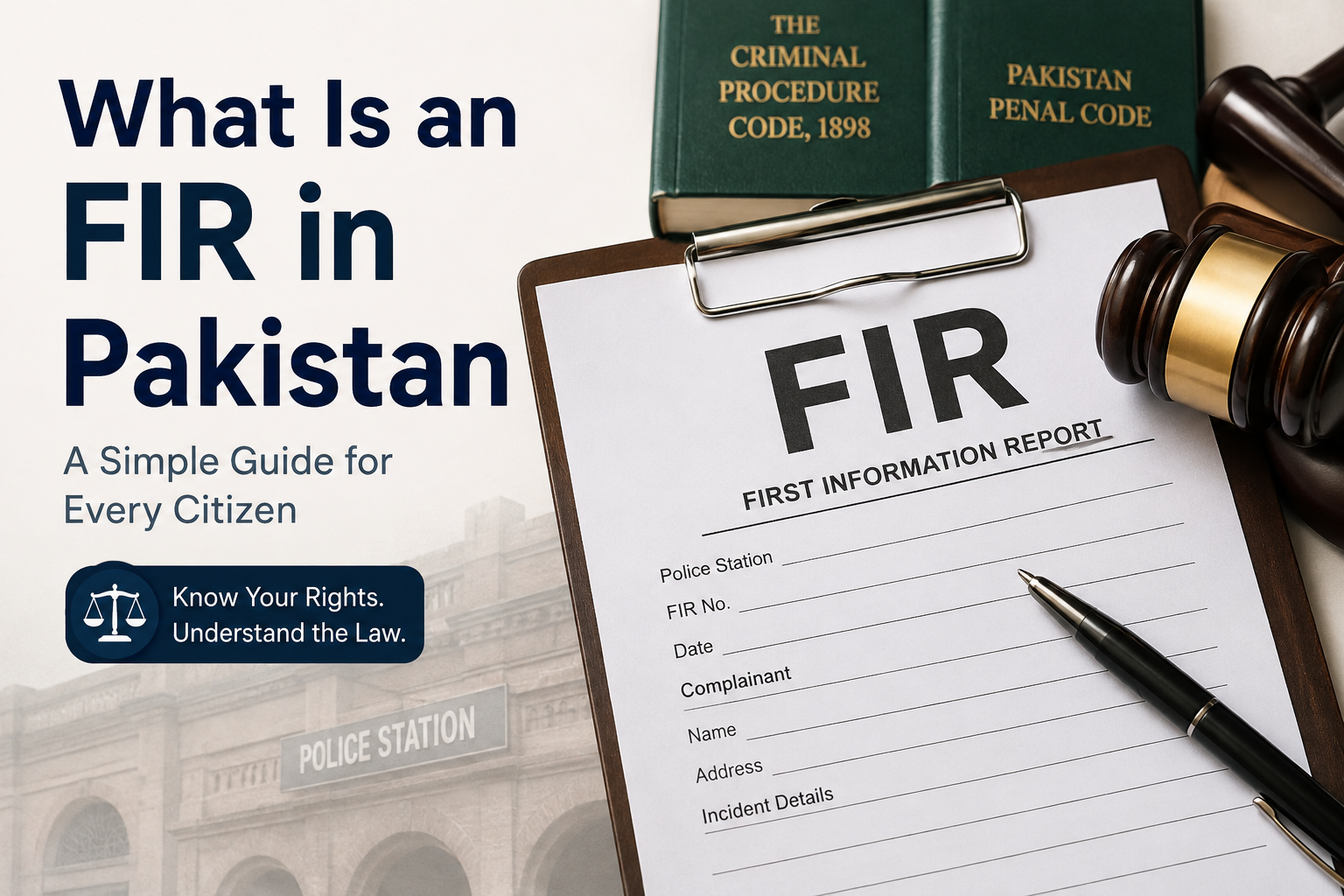
An FIR normally contains important information about the reported incident. The exact format can vary, but it generally identifies the police station, date and time, details of the complainant, description of the incident, and information about the alleged offence.
Where known, details about suspects, witnesses, property, vehicles, locations, and other relevant facts may also be included.
One thing I would strongly suggest is checking the written FIR carefully before signing it. If information has been recorded incorrectly, the issue should be raised immediately through the appropriate legal or police channel.
Accuracy matters because the FIR can become an important document during the investigation and later court proceedings.
What Happens After an FIR Is Registered?
Registration of an FIR is generally the beginning of the investigation rather than the end of the case.
After registration, police may investigate the allegations, visit the relevant location, collect evidence, question witnesses, recover property, obtain documents, and take other lawful investigative steps.
The next stages depend on the nature of the offence and the evidence available.
An FIR itself is not a final judgment. A person mentioned as an accused remains entitled to the protections provided by law, and guilt is ultimately determined through the appropriate legal process.
This is why I think people should avoid treating an FIR as proof that someone is guilty. It is a record of information concerning an alleged offence and an important starting point for investigation.
Can Police Refuse to Register an FIR?
This is a common concern in Pakistan.
Punjab Police states that every person has a right to report a matter at the concerned police station and have a case registered in the form of an FIR where the matter involves a cognizable offence. It also states that a police officer does not have the authority to refuse registration of a case in such circumstances.
If a person believes an FIR is not being registered despite a report concerning a cognizable offence, there are complaint and supervisory channels available.
For example, Punjab Police operates an IGP Police Complaint Center that accepts complaints regarding non registration of FIRs, faulty investigations, illegal detention, false FIRs, and other police related matters.
The appropriate procedure can differ between provinces, so people should check the official police system applicable to their location.
What If Someone Files a False FIR?
A false FIR can create serious difficulties for the person named in it. However, being named in an FIR does not automatically mean that the allegations are true.
If someone believes that an FIR has been registered falsely or maliciously, they should consider obtaining proper legal advice and using the legal remedies available under the circumstances.
Punjab Police also recognizes complaints concerning false FIRs through its complaint system.
There can also be legal consequences for deliberately providing false information. Punjab Police explains that Section 182 of the Pakistan Penal Code concerns false information given to a public servant and notes that proceedings under this provision involve the court process.
Because these matters can become complicated, it is better to avoid making accusations without evidence.
Can an FIR Be Cancelled?
People sometimes ask whether an FIR can simply be cancelled after it has been registered.
The answer is that cancellation is not something a person should assume can happen merely because the complainant changes their mind. The legal process depends on the circumstances, the investigation, the evidence, and applicable law.
In some cases, the investigation may find that the allegations are not supported by sufficient evidence. In other situations, the matter may continue through the criminal justice system.
If someone is involved in a disputed FIR, consulting a qualified lawyer can help them understand the specific legal options available in their case.
Is an FIR the Same as a Court Case?
An FIR and a court case are related, but they are not exactly the same thing.
An FIR is registered with the police and generally starts the investigation of a cognizable offence. A court case involves judicial proceedings before the appropriate court.
After investigation, the police may submit the relevant report or challan according to the applicable legal procedure. The court then deals with the matter according to law.
So, when someone says that an FIR has been registered, it does not necessarily mean that the court has already decided the case.
Importance of Getting a Copy of the FIR
Getting a copy of the FIR is extremely important for the complainant and can also be important for other people legally involved in the matter.
Punjab Police states that a certified copy of the FIR, signed by an officer and bearing the police station stamp, should be provided to the person who reports the crime.
I recommend keeping this document safely because it contains important details about the reported incident. It may also help when speaking with a lawyer or following the progress of the investigation.
Punjab Police has also developed digital record systems. Its Police Station Record Management System records FIR information electronically and allows supervisory officers to access case related information.
What Should You Do If Your Name Is in an FIR?
If you discover that your name has been included in an FIR, do not panic or make rushed decisions.
First, try to obtain accurate information about the FIR, including the police station, FIR number, date, sections mentioned, and allegations.
Next, consider speaking with a qualified criminal lawyer who can review the situation and explain the legal options available to you.
Do not ignore official notices or communications from authorities. At the same time, avoid giving statements or signing documents that you do not understand.
Every criminal matter is different, so general information cannot replace professional legal advice for a specific case.
Final Thoughts
In my opinion, knowing what an FIR is can help ordinary people understand their basic position when dealing with the police and criminal justice system in Pakistan.
An FIR, or First Information Report, is an important record concerning information about a cognizable offence. It can begin a police investigation, but it is not itself a declaration that an accused person is guilty.
People should provide accurate information, keep copies of important documents, obtain the FIR copy where applicable, and understand the difference between a police report and a court judgment.
The law and police procedures can also change, and procedures may differ between provinces. For a real legal dispute, it is always sensible to verify the current rules and seek advice from a qualified legal professional.
Understanding the FIR process does not mean that a person needs to become a legal expert. It simply means knowing the basic steps, protecting important documents, and understanding that everyone involved in a criminal matter should follow the proper legal process.
Important Note: This article is provided for general educational information only. It is not legal advice and should not be treated as a substitute for advice from a qualified lawyer familiar with the facts of a particular case.