Elections are one of the most important parts of democracy in Pakistan. For many people, elections may look simple from the outside. Candidates campaign, people vote, votes are counted, and winners are announced. However, the actual election process involves many steps before and after polling day.
In my view, understanding how elections work in Pakistan is important for every citizen because voting is not only about choosing a political party. It is also about understanding how representatives are selected and how the government gets its democratic mandate.
This beginner friendly guide explains the Pakistan election process, how voters register, how candidates contest elections, what happens on polling day, how votes are counted, and how the government is formed.
What Are Elections in Pakistan?
Elections allow citizens to choose representatives who will work in elected institutions. Pakistan has a parliamentary system, and the Parliament consists of the National Assembly and the Senate. The National Assembly is directly elected for general seats, while the Senate represents the provinces through an indirect election system.
When most people talk about general elections in Pakistan, they are usually talking about elections for the National Assembly and Provincial Assemblies.
The National Assembly is particularly important because the Prime Minister is elected by the members of the National Assembly. Therefore, the results of a general election can determine which political group has the ability to form the federal government.
Who Can Vote in Pakistan?
Voting is a constitutional right for eligible Pakistani citizens. Generally, a person must be a Pakistani citizen and at least 18 years old. The person’s name must also appear on the electoral roll for the relevant area.
This means that simply being 18 years old is not enough if your name is not correctly included in the electoral roll.
The Election Commission of Pakistan maintains and updates electoral rolls. The ECP states that electoral rolls are prepared so eligible citizens can exercise their right to vote and that the rolls are periodically updated.
For this reason, I believe checking your voter registration before an election is one of the simplest things a citizen can do.
What Is the Election Commission of Pakistan?
The Election Commission of Pakistan, commonly known as the ECP, plays a central role in conducting elections.
The commission is responsible for important parts of the electoral process, including electoral rolls, constituency delimitation, election arrangements and the conduct of polling.
The Elections Act also gives the Election Commission responsibility for organizing elections and making arrangements to ensure that elections are conducted honestly, justly and fairly according to law.
In simple words, political parties contest elections, but the Election Commission manages the electoral process.
How Are Constituencies Created?
Pakistan is divided into electoral constituencies. A constituency is an area represented by an elected member.
Before elections, constituencies can be reviewed and delimited according to legal requirements and population data. This process is known as delimitation.
The purpose of delimitation is to create electoral areas from which representatives can be elected. Population distribution is an important factor in the allocation of National Assembly seats.
For a voter, understanding your constituency is important because you need to know which candidates are contesting from your area.
How Do Candidates Contest Elections?
Political parties usually nominate candidates to contest elections under their party banners. Independent candidates can also contest elections.
Before a person can appear as a candidate, they must complete the legal nomination process. Election officials examine nomination papers according to the applicable election laws.
Candidates then receive an opportunity to campaign and communicate their ideas to voters.
During an election campaign, candidates and political parties may hold public meetings, visit communities, use social media, distribute campaign material and discuss their policies.
In my opinion, this is the stage where voters should pay close attention. Instead of looking only at slogans or personalities, people should consider the candidate’s record, plans, experience and understanding of local issues.
What Happens on Election Day?
Polling day is the most visible part of the election process.
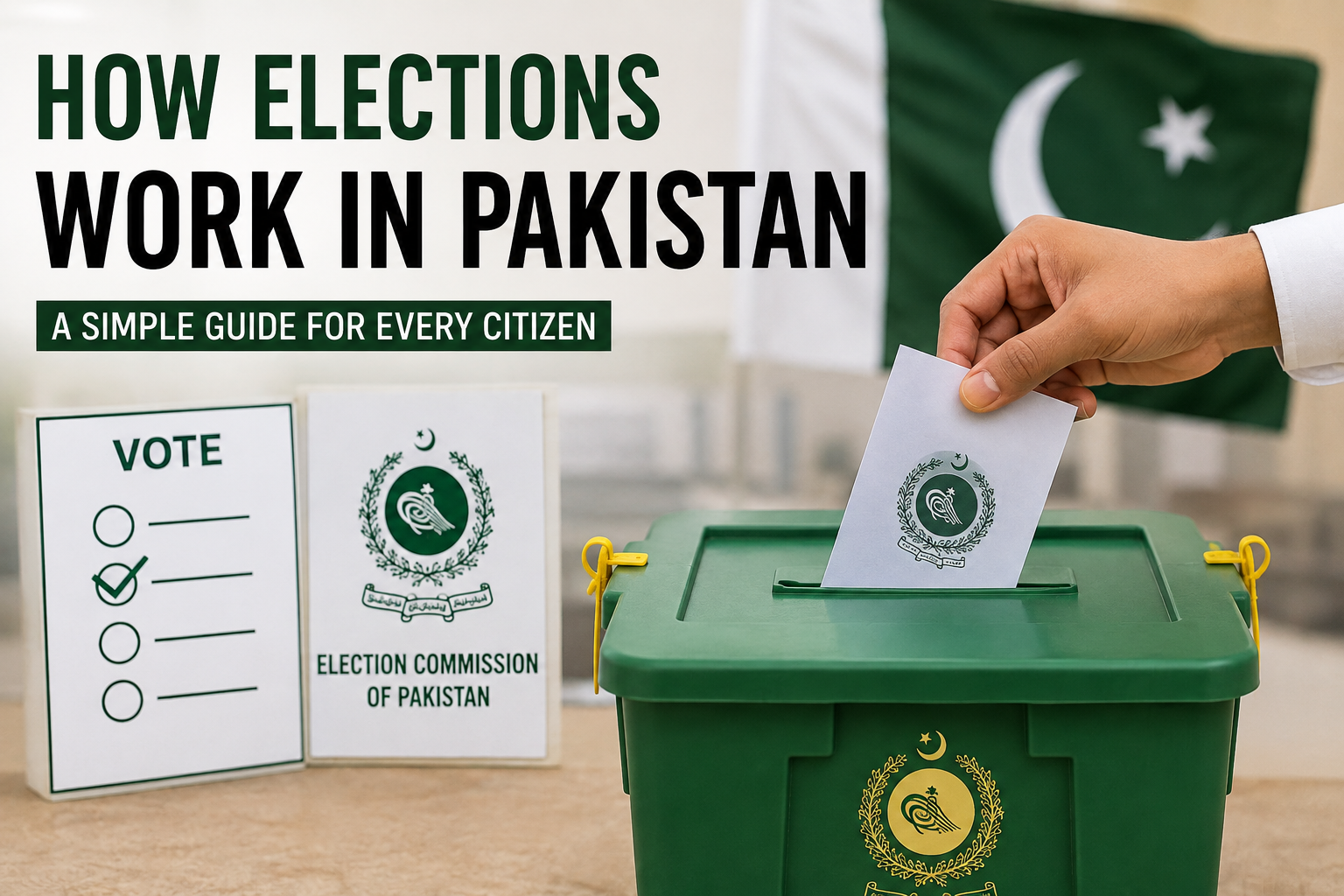
Voters go to their assigned polling stations. Election staff verify the voter’s identity and eligibility according to the established procedure. The voter is then provided with the ballot paper or papers relevant to the election.
The voter goes to the designated voting area and marks the ballot according to the instructions.
After voting, the ballot is placed into the ballot box.
The basic purpose of secret voting is to allow citizens to make their choice privately without being forced to reveal who they voted for.
A voter should also be careful when marking the ballot because an incorrectly marked ballot can potentially become invalid according to election rules.
How Are Votes Counted?
After polling ends, the counting process begins at the polling station.
The ballots are counted according to the prescribed procedure. Candidates’ polling agents and other authorized participants can observe important parts of the process.
The result from an individual polling station contributes to the overall result of the constituency.
This is an important point for beginners to understand. A television channel or political party may announce a result before the official consolidated result is completed. Preliminary results can appear quickly, but the formal election result follows the legally established process.
The Election Commission explains that preliminary results may be announced after polling, followed by consolidated results prepared by Returning Officers.
How Does a Candidate Win?
For general constituency seats, voters directly choose their preferred candidate.
The candidate who receives the highest number of valid votes in the constituency wins that general seat under the applicable electoral system.
This is why every vote matters at the constituency level. A candidate does not necessarily need to receive more than half of all votes to win a constituency. What matters is receiving more votes than the other candidates under the applicable rules.
For example, imagine three candidates receive 40,000, 35,000 and 25,000 votes. The candidate with 40,000 votes would have the highest vote total and would win that constituency, assuming all other legal requirements are satisfied.
What Are Reserved Seats?
Pakistan’s electoral system also includes reserved seats, including seats for women and non Muslim citizens.
These seats are not filled in exactly the same way as ordinary constituency seats. Their allocation follows constitutional and legal procedures involving political parties and proportional representation.
This is an important part of understanding the Pakistan election system because the final composition of an assembly is not based only on the directly elected general seats.
The Constitution provides for reserved seats and establishes the relevant method for their allocation.
How Is the Prime Minister Chosen?
One common misunderstanding is that Pakistani voters directly vote for the Prime Minister.
In a general election, voters primarily vote for candidates contesting National Assembly seats. After the election, members of the National Assembly participate in the process of choosing the Prime Minister.
The political party or coalition that can secure the required support in the National Assembly has the opportunity to form the federal government.
This is why the number of National Assembly seats won by a party is extremely important.
A party that does not have enough seats on its own may work with other elected members or parties to establish the support needed to form a government.
What Happens in the Provincial Elections?
Pakistan also has Provincial Assemblies.
Each province has its own assembly, and voters in that province elect representatives for provincial constituencies.
Provincial governments deal with many matters that directly affect everyday life, including areas such as education, health, local development and other responsibilities assigned under the constitutional framework.
The provincial election process also involves constituencies, candidates, polling stations, vote counting and official results.
Therefore, during a general election, voters may be choosing representatives for both the National Assembly and their Provincial Assembly.
What Happens After the Results?
After polling and counting, election results go through the required consolidation and reporting process.
Successful candidates are officially declared according to election law. After the elected assemblies are constituted, members take part in the parliamentary process.
At the federal level, the National Assembly elects the Prime Minister. At the provincial level, the relevant Provincial Assembly elects the Chief Minister.
The National Assembly normally has a five year constitutional term unless it is dissolved earlier.
Why Should Ordinary Citizens Understand Elections?
I think elections become much easier to understand when we stop looking at them only as political battles.
An election is a system through which citizens select representatives. It connects ordinary people with government institutions.
For a voter, the process begins before election day. Checking registration, learning about candidates, understanding constituency boundaries and studying important issues can make voting more meaningful.
People also have different political opinions, and that is normal in a democratic society. The important thing is that political disagreement should not prevent citizens from learning about the electoral system.
How Can You Become a Better Voter?
A responsible voter does not need to be a political expert.
You can start with a few simple habits.
First, understand your constituency and know which seats you are voting for.
Second, learn about the candidates instead of relying only on social media posts.
Third, compare the policies and previous performance of political parties.
Fourth, avoid believing every election claim without checking reliable information.
Finally, vote according to your own judgment and follow the official voting instructions at your polling station.
In my opinion, informed voting is more valuable than simply voting because friends, family members or social media influencers support a particular candidate.
Final Thoughts
Understanding how elections work in Pakistan does not have to be complicated. The basic process can be understood by looking at a few major stages: voter registration, constituency preparation, candidate nominations, election campaigns, polling, vote counting, result consolidation and government formation.
The Election Commission of Pakistan plays a central administrative role, while citizens provide the most important part of the democratic process by participating in elections.
For beginners, the most important thing to remember is that your vote is connected to a larger parliamentary system. You are not simply choosing a name on a ballot. You are helping determine who represents your constituency and, through the composition of elected assemblies, who has the support to form governments.
I believe that learning about elections is useful even for people who are not deeply interested in politics. Once you understand the basic process, election news becomes easier to follow and political discussions become easier to understand.
A healthy democracy depends not only on politicians and institutions but also on citizens who understand their rights, responsibilities and the electoral process.
Primary SEO Keyword: How Elections Work in Pakistan
Secondary Keywords: Pakistan election process, how voting works in Pakistan, Pakistan voting system, Election Commission of Pakistan, elections in Pakistan, how to vote in Pakistan, National Assembly elections Pakistan, Provincial Assembly elections Pakistan
Suggested WordPress Meta Description: Learn how elections work in Pakistan, including voter registration, constituencies, candidates, polling, vote counting, results and government formation in this simple beginner guide.