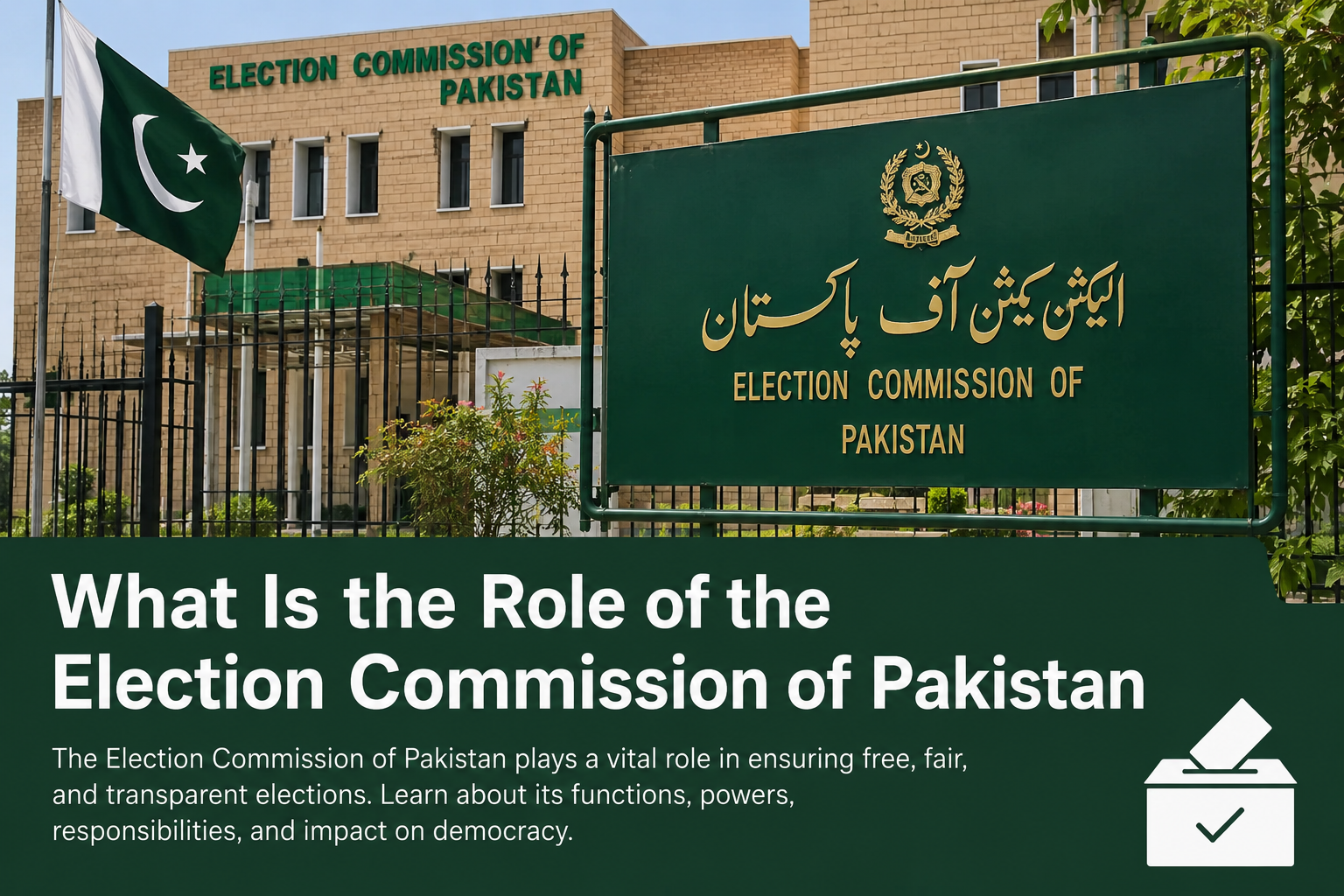
The Election Commission of Pakistan, commonly known as the ECP, plays one of the most important roles in the democratic system of Pakistan. Whenever people talk about elections, political parties, candidates, voting, and the formation of governments, the Election Commission of Pakistan is an important institution behind the entire process. In my view, understanding the role of the ECP is important for every Pakistani because elections are directly connected with how representatives are chosen and how democratic institutions function.
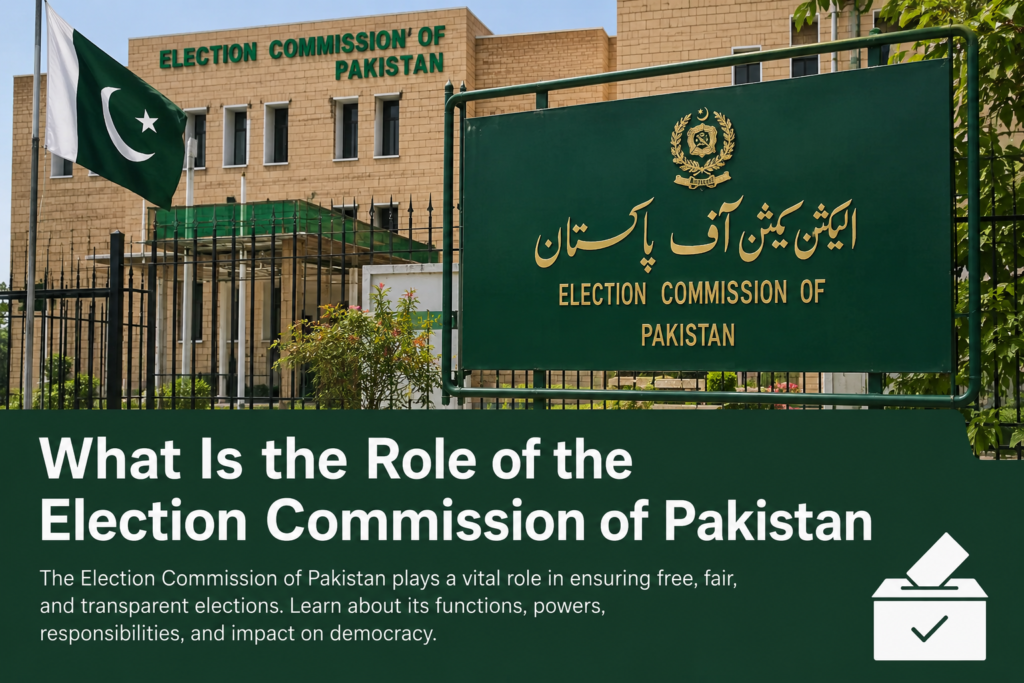
The Election Commission of Pakistan is an independent constitutional body responsible for organizing and supervising elections in the country. Its responsibilities cover much more than simply arranging polling day. It works on voter registration, electoral rolls, election schedules, polling arrangements, candidate procedures, election rules, and several other matters connected with the electoral process.
What Is the Election Commission of Pakistan?
The Election Commission of Pakistan is a constitutional institution established under the Constitution of Pakistan. Its main responsibility is to organize and conduct elections in accordance with the Constitution and relevant election laws.
The ECP works to ensure that elections are conducted in a manner that is fair, transparent, and credible. It also has responsibilities relating to elections for the National Assembly, Provincial Assemblies, and other elected institutions.
The commission is headed by the Chief Election Commissioner and includes other members according to the constitutional framework. Together, they perform the duties assigned to the Election Commission by the Constitution and election laws.
Why Is the Election Commission Important?
In my opinion, the importance of the Election Commission of Pakistan can be understood by looking at what would happen without an independent election management body. Elections involve millions of voters, thousands of candidates, political parties, polling stations, election staff, and a large amount of administrative work.
Someone has to establish the rules and organize the process.
The ECP provides this institutional framework. It helps make sure that voters have the opportunity to participate, candidates follow election laws, polling arrangements are made, and election results are compiled according to established procedures.
A strong election commission can also increase public confidence in the democratic process.
Conducting General Elections
One of the biggest responsibilities of the Election Commission of Pakistan is conducting general elections.
Before an election takes place, the ECP has to complete many important tasks. These include preparing election schedules, managing polling arrangements, appointing election officials, preparing relevant documents, and coordinating with government departments where necessary.
On polling day, election staff work at polling stations across the country. The ECP provides instructions and procedures for the conduct of voting and counting.
This makes the election process possible on a national scale.
Preparing and Updating Electoral Rolls
Another major role of the Election Commission of Pakistan is maintaining electoral rolls.
An electoral roll is basically the official list of registered voters. For a person to vote, their name must be included in the relevant electoral record.
The ECP works with relevant institutions to prepare and update voter lists. This process is important because accurate voter information helps reduce confusion and makes elections more organized.
Citizens can also check their voter information through the official systems provided for this purpose.
From my perspective, voter registration is one of the most important parts of an election because a person cannot effectively participate in an election if their voting information is incorrect or missing.
Delimitation of Constituencies
The Election Commission of Pakistan also has an important role in the delimitation of constituencies.
Delimitation means determining the boundaries of electoral constituencies. Constituencies are created so that voters are grouped into areas for representation in elected assemblies.
This is not simply a matter of drawing lines on a map. It involves legal requirements, population information, administrative considerations, and constitutional principles.
Proper delimitation is important because constituency boundaries can affect how citizens are represented in Parliament and Provincial Assemblies.
Registration of Political Parties
Political parties are an essential part of the electoral system. The Election Commission of Pakistan has responsibilities relating to the registration and regulation of political parties under the applicable laws.
Political parties must follow relevant legal requirements. The ECP maintains information about political parties and performs functions connected with their legal status and electoral participation.
This helps create an organized political environment where parties participate according to established rules.
Monitoring Election Rules
The ECP also has responsibilities for ensuring compliance with election laws and rules.
Candidates and political parties are expected to follow the legal requirements applicable to elections. These requirements can cover matters such as campaign conduct, election expenses, nomination procedures, and other electoral activities.
The commission can take action within its legal authority when election rules are violated.
This responsibility is important because elections need common rules for all participants. Without rules and enforcement, the electoral process could become difficult to manage and public trust could be affected.
Appointing Election Staff
Conducting elections in Pakistan requires a huge administrative structure. Polling stations need presiding officers, polling officers, and other staff members.
The Election Commission is responsible for making arrangements for election officials and providing them with relevant instructions and training.
These officials play a practical role on election day. They verify voters, manage polling procedures, maintain election records, and assist with the counting process according to the prescribed rules.
In my view, trained election staff are essential because even well designed election laws cannot work properly without people who understand how to implement them.
Managing Polling Stations
The ECP also oversees arrangements relating to polling stations.
Polling stations need to be established in suitable locations so registered voters can participate. Information about polling stations and electoral areas is made available through the election system.
On election day, the polling process follows specific procedures designed to protect the secrecy of the vote and maintain an orderly environment.
The goal is to allow eligible voters to cast their votes without unnecessary difficulty or interference.
Counting and Compilation of Results
After voting ends, votes are counted according to established election procedures.
The counting process is one of the most sensitive stages of an election because voters, candidates, political parties, and the public are interested in knowing the outcome.
Election officials prepare relevant result documents and the results move through the prescribed process for compilation and announcement.
The Election Commission has an important responsibility in managing this overall system and publishing official election information.
Election Complaints and Disputes
Another important aspect of the electoral system is dealing with complaints and disputes.
During elections, candidates and political parties may raise concerns about polling procedures, election rules, campaign activities, or other matters.
The Election Commission has powers and procedures for dealing with matters that fall within its jurisdiction. Some election disputes may also be handled through election tribunals or other legal forums depending on the nature of the issue.
This system gives candidates and other stakeholders legal channels through which election related concerns can be addressed.
Promoting Transparency
Transparency is a major part of a credible election.
The Election Commission publishes election related information and provides rules and instructions for candidates, political parties, election officials, and voters.
Transparency helps people understand how the electoral process works. It also allows journalists, political parties, civil society groups, and ordinary citizens to follow different stages of an election.
In my opinion, transparency does not mean that everyone will agree with every election decision. Instead, it means that decisions and procedures should be understandable and based on established laws.
Voter Awareness and Education
The Election Commission also has an important role in voter education.
Many people vote for the first time in every election, particularly young voters. They may not know how to check their registration, where to vote, or what documents and procedures are required.
Voter education can help citizens understand their rights and responsibilities.
An informed voter is more likely to participate confidently and understand the importance of casting a vote.
The ECP and Democratic Stability
The Election Commission of Pakistan is closely connected with democratic stability.
Elections provide citizens with a way to choose representatives. When elections are conducted according to established procedures, they help create a peaceful mechanism for political change.
Political parties may win or lose elections, but the electoral system provides a legal process through which governments and representatives can be selected.
This is why the independence and credibility of the Election Commission matter so much.
Challenges Faced by the Election Commission
Managing elections in a country as large and diverse as Pakistan is not an easy task.
The ECP has to deal with a large number of voters, thousands of polling stations, different geographical conditions, political competition, security concerns, administrative challenges, and increasing public expectations.
Technology has also changed the way people discuss elections. Social media can spread information very quickly, but misinformation can also create confusion.
The commission therefore has to work in an environment where public attention is extremely high.
Why Citizens Should Understand the ECP
I believe ordinary citizens should know about the Election Commission because democracy is not only about political leaders. It is also about voters.
Understanding the ECP helps people understand where election rules come from, how voter registration works, how constituencies are organized, and how elections are conducted.
When citizens understand the system, they can participate more responsibly and make better use of their democratic rights.
Final Thoughts
The Election Commission of Pakistan has a central role in the country’s electoral and democratic system. Its responsibilities include conducting elections, maintaining electoral rolls, managing polling arrangements, overseeing election procedures, regulating relevant political party matters, supporting voter education, and performing other constitutional and legal duties.
In my view, the role of the ECP is much bigger than what people usually see on election day. A successful election depends on months and sometimes years of preparation, legal procedures, voter records, constituency arrangements, trained staff, and administrative planning.
A strong electoral system requires cooperation between election officials, political parties, candidates, government institutions, media, civil society, and most importantly, voters.
For Pakistan’s democracy to become stronger, citizens need to understand how elections work and why institutions such as the Election Commission of Pakistan matter. The ECP provides the framework through which millions of citizens can participate in choosing their representatives. Its work therefore remains an important part of democratic governance in Pakistan.