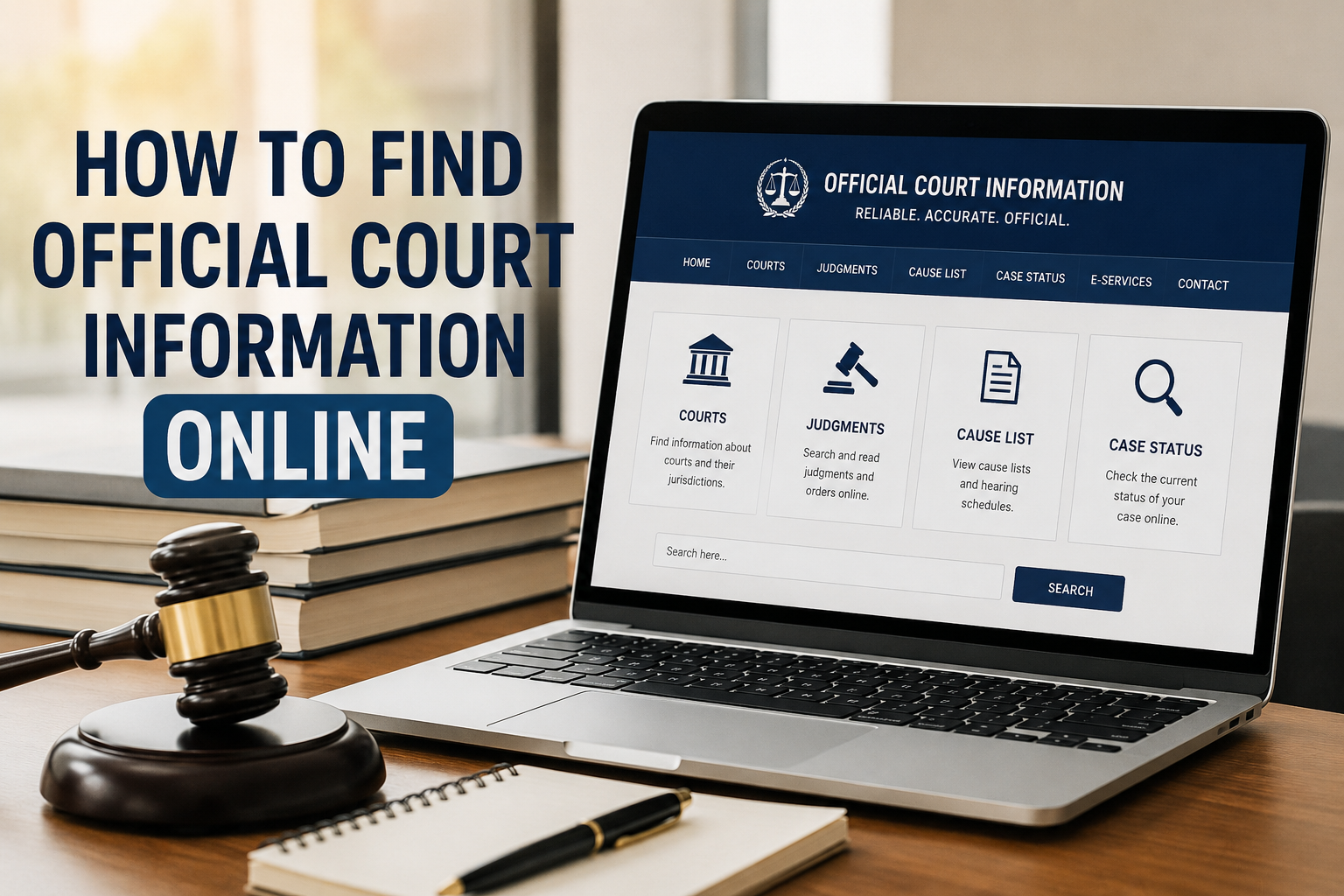
Finding official court information online has become much easier than it was in the past. In my view, the internet has made it possible for ordinary people to access important legal information without always having to visit a court office. Whether someone wants to check a case status, find a court judgment, view a cause list, or understand where a case is being heard, official online court resources can save a lot of time.
However, one important thing I have learned is that not every website discussing a court case is reliable. Many websites, blogs, social media pages, and forums share legal information, but they may not provide complete or accurate details. When I need reliable court information, I prefer to start with an official court website or an official government source.
In this article, I will explain how to find official court information online, how to identify trustworthy sources, what information you can usually find, and what mistakes you should avoid.
Why Official Court Information Matters
Court information can affect important decisions. A person may need to know whether a case has been filed, whether a hearing has been scheduled, whether an order has been issued, or whether a judgment is available.
For this reason, relying on random online information can create confusion. An unofficial website may publish old information or misunderstand a legal document. Official court websites are generally a better starting point because they are connected with the relevant judicial institution.
I believe the safest approach is to treat online legal information as a starting point for research. If a matter is important or complicated, professional legal advice may still be necessary.
Start With the Official Court Website
The first step is to identify the court that has information about the case or legal matter. Different courts have different jurisdictions and online systems.
For example, a country may have a supreme court, high courts, district courts, special courts, or other judicial bodies. Each institution may maintain its own website or online information system.
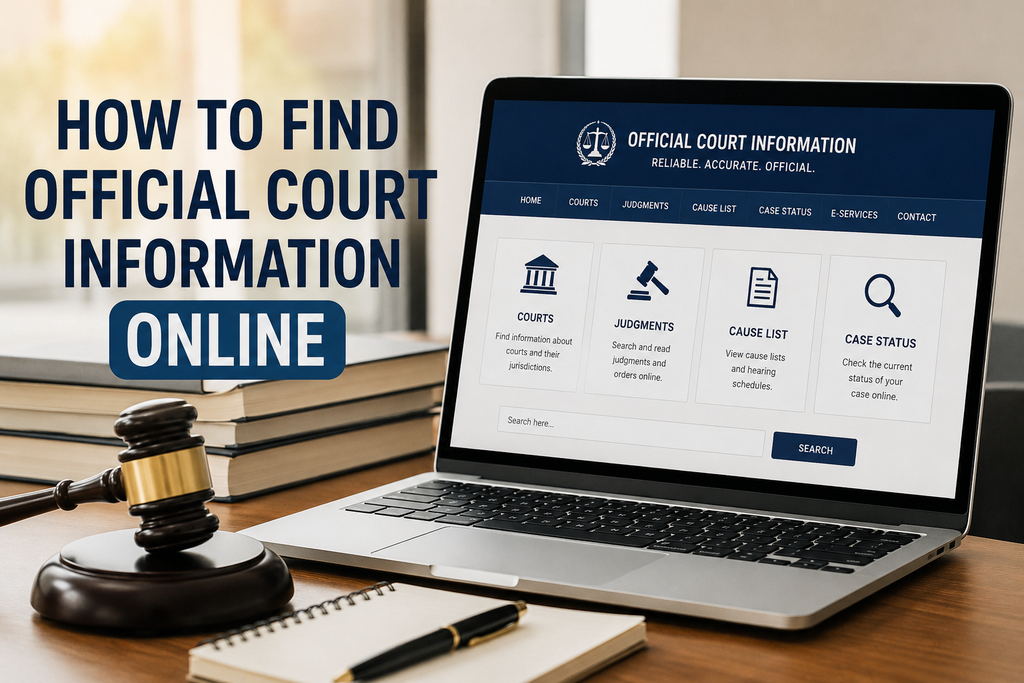
Instead of searching only for the name of a case on a search engine, I recommend searching for the official name of the court first. Look for the court’s official website and check whether it provides services such as case search, judgments, cause lists, court schedules, or e services.
The official website should normally provide information about the court itself, its jurisdiction, contact details, procedures, and available online services.
Use the Correct Case Search Tool
One of the most useful features on many court websites is an online case search system. Depending on the court, users may be able to search by case number, party name, advocate name, year, or other information.
If you already know the case number, that is often the easiest way to search. A case number can help narrow the results and reduce the possibility of finding a different case with a similar name.
If you do not have the case number, some systems allow searches using the names of the parties. However, names can sometimes be spelled differently, so it is important to check the results carefully.
When using an official court search system, I recommend checking several details together, including the case title, case number, filing year, court name, and current status.
Check Court Judgments and Orders
Another important source of official court information is the judgment or order section of a court website.
A judgment usually explains the decision of the court and may contain important legal reasoning. An order can provide information about what happened during a particular stage of a case.
When reading a judgment online, I think it is important to read the document in context. A headline or short summary may not explain the entire decision. The actual court document is much more useful for understanding what the court decided.
Search engines may also display copies of judgments on legal websites. These can sometimes be helpful for research, but when an official version is available, I prefer checking that version first.
Look for the Cause List
A cause list is another useful type of official court information. It generally contains cases scheduled to be heard by a court on a particular day or during a particular sitting.
If you want to know whether a case is listed for hearing, the court’s cause list can be very useful.
The format of cause lists varies between courts. Some may organize cases by courtroom, bench, judge, case number, or hearing date.
Before relying on a cause list, I recommend checking the date carefully. Court schedules can change, and an old cause list may no longer reflect the current schedule.
Verify the Court’s Case Status
Many courts provide online case status services. These systems may show information about the stage of a case, previous hearings, upcoming dates, orders, or other available details.
However, users should understand that an online case status page may not contain every detail of a legal proceeding. Some information may only be available through official court records or the court registry.
If an online record appears incomplete or unclear, it is better to contact the relevant court office rather than making assumptions.
Use Government Websites When Appropriate
Official court information is not always limited to a court’s main website. Government departments and official judicial portals may also provide legal information and links to courts.
When I search for official information online, I pay attention to the website’s domain and its connection with the relevant government or judicial institution.
A professional looking website is not automatically an official website. Anyone can create a website that looks authoritative. That is why checking the source is so important.
Be Careful With Search Engine Results
Search engines are extremely useful for finding court information, but the first result is not necessarily the official source.
A search for a case name may produce news articles, blogs, law firm websites, social media posts, discussion forums, and official court pages.
I normally use search engines to locate the relevant official source and then verify the information directly on that source.
For example, if a search result discusses a court judgment, I would look for the actual judgment on the court’s website where possible. This gives me a stronger basis for understanding the decision.
Check the Date of the Information
Legal information can change over time. A case that was pending last year may have been decided today. A hearing date can change, and an online page can sometimes remain available even after information has become outdated.
For this reason, checking the publication date, hearing date, update date, or document date is important.
When researching a court case, I recommend comparing the latest available information with earlier records. This can help you understand the development of the case.
Do Not Confuse Legal News With Court Records
Legal news can be useful, especially when a case is receiving public attention. News reports may explain complicated legal matters in simple language.
However, a news report is not the same thing as an official court record.
A journalist may summarize a judgment, while the actual court document may contain additional facts, reasoning, or legal issues that were not included in the article.
In my opinion, news articles are best used for background information, while official court documents should be used when you need to verify what the court actually said or decided.
Protect Your Personal Information
When searching for court information online, users should also think about privacy and security.
Avoid entering unnecessary personal information into unknown websites. Be particularly careful with websites that ask for sensitive information without clearly explaining why it is required.
Use official websites whenever possible, especially when dealing with case records or legal documents.
It is also wise to avoid downloading unknown files from suspicious websites. Official court websites should be your preferred source for court related documents.
What If You Cannot Find the Information?
Sometimes official court information may not be available online. This does not necessarily mean that the case does not exist.
Some courts have limited online services, while older records may not have been digitized. Certain documents may also be available only through the court registry or another official process.
If you cannot find the information online, check the court’s official contact details and ask the relevant office how the record can be accessed.
I think this is much safer than relying on an unofficial website that claims to have information that cannot be verified.
Common Mistakes to Avoid
There are several mistakes people can make when searching for official court information online.
The first is relying on social media posts as proof of a court decision. Social media can spread information quickly, but it is not a substitute for an official court record.
The second mistake is checking only the case title. Similar names can appear in different cases, so the case number and court should also be verified.
Another mistake is relying on old information. Always check the date and look for the most recent available update.
Finally, people sometimes read a short summary and assume they understand the entire judgment. Court decisions can be complicated, so important legal matters should be discussed with a qualified legal professional when necessary.
Final Thoughts
Finding official court information online is a useful skill for anyone who wants to understand the legal system. In my experience, the most reliable approach is to begin with the official court or government website, use the court’s case search tools, check judgments and orders, review cause lists, and verify the date of every important document.
The internet can make legal research faster, but it also creates the risk of misinformation. That is why source verification matters so much.
If you are researching a court case, do not simply trust the first result you see. Take a few extra minutes to identify the official source and compare the available details. When the matter involves important legal rights or obligations, online research should not replace advice from a qualified lawyer.
By using official court websites carefully and verifying information before relying on it, anyone can become more confident when searching for court information online.