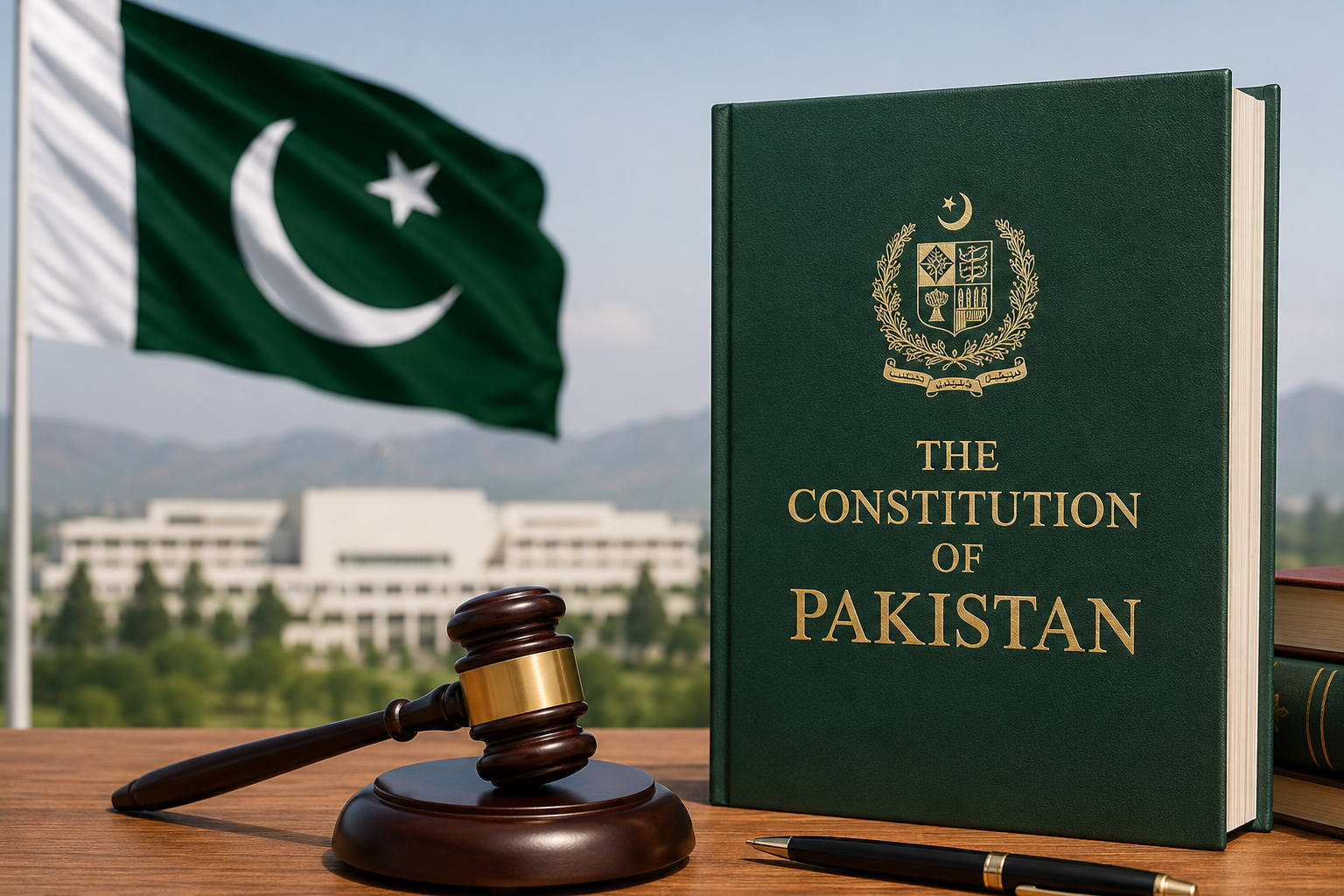
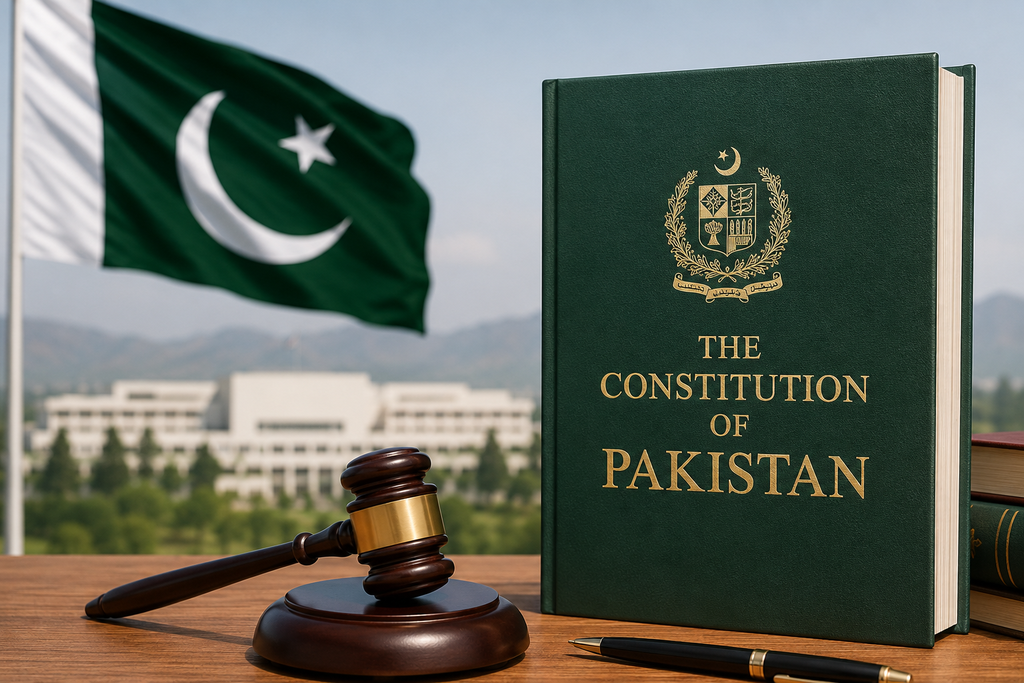
When we talk about the Constitution of Pakistan, we are talking about the basic legal document that explains how the country is governed. In my view, understanding the Constitution is important for every Pakistani because it is not only a document for lawyers, judges, politicians, or government officials. It affects the rights, responsibilities, institutions, and everyday life of ordinary citizens.
The Constitution of Pakistan provides the framework for the state. It explains the powers of the Parliament, President, Prime Minister, courts, provinces, and other important institutions. It also recognizes fundamental rights and establishes principles that guide the government.
The current Constitution of Pakistan was adopted in 1973. It came into force on August 14, 1973, and remains the basic constitutional framework of the country, although it has been amended many times over the years.
What Is the Constitution of Pakistan?
The Constitution of Pakistan is the supreme law of the country. This means that other laws and government actions are expected to remain consistent with constitutional requirements.
In simple words, the Constitution sets the rules for running the state. It describes how political institutions work, how powers are distributed, and what fundamental rights are protected.
For me, the easiest way to understand a constitution is to think of it as a rulebook for a country. Just as a game needs rules so that everyone knows what is allowed and what is not allowed, a country needs constitutional rules to organize government and protect citizens.
The Constitution also establishes the relationship between the federal government and the provinces. This is especially important in Pakistan because the country has a federal system in which powers are distributed between the federation and provinces.
When Was the Constitution of Pakistan Made?
Pakistan has had several constitutional developments since independence in 1947. The country initially operated under the Government of India Act 1935, with necessary adaptations, while efforts were made to develop a permanent constitutional framework.
Pakistan’s first constitution was introduced in 1956. It was followed by the Constitution of 1962. Both constitutional arrangements were eventually replaced.
The Constitution currently in force was passed in 1973. It was prepared after extensive political discussions and received approval from the country’s elected representatives.
The Constitution of 1973 established a parliamentary form of government and provided a detailed framework for the federation, provinces, Parliament, judiciary, fundamental rights, and other state institutions.
Main Purpose of the Constitution
The main purpose of the Constitution of Pakistan is to provide a legal and political structure for the country.
One important purpose is to define the powers of government institutions. Without clear constitutional rules, different institutions could potentially interfere with each other’s responsibilities.
Another important purpose is the protection of fundamental rights. Citizens need legal protection so that government authority does not become unlimited.
The Constitution also provides principles relating to democracy, equality, freedom, justice, and the Islamic character of the state.
In my opinion, this balance between government authority and individual rights is one of the most important ideas behind any constitution.
Fundamental Rights in the Constitution of Pakistan
One of the most important parts of the Constitution is the section dealing with fundamental rights.
Fundamental rights are basic protections given to citizens. They are intended to protect individuals from unlawful or arbitrary treatment.
These rights include important protections relating to life and liberty, equality of citizens, freedom of movement, freedom of assembly, freedom of association, freedom of speech, freedom to profess religion, and other constitutional protections, subject to the limitations and conditions provided by law and the Constitution.
The Constitution also provides protection against discrimination in certain circumstances and recognizes important rights relating to education and property.
These rights are extremely important because they connect the Constitution with the everyday lives of ordinary people. Constitutional law may sound complicated, but fundamental rights show why the Constitution matters outside courtrooms and government offices.
Federal System of Pakistan
Pakistan has a federal system of government. This means that constitutional powers are divided between the federal government and provincial governments.
Pakistan consists of provinces and other constitutionally recognized territories and areas. Provincial governments have their own institutions and responsibilities.
The federal government deals with matters assigned to the federation under the constitutional system, while provinces exercise powers within their constitutional areas of responsibility.
This distribution of powers helps manage a large and diverse country. It also gives provinces an important role in governance and administration.
The constitutional relationship between the federation and provinces has changed in practical importance over time, particularly through constitutional amendments.
Parliament of Pakistan
The Constitution establishes Parliament as an important part of the federal legislative system.
Pakistan has a bicameral Parliament consisting of the National Assembly and the Senate.
The National Assembly represents the people through elected members. The Prime Minister is generally selected from the National Assembly and leads the federal government under the parliamentary system.
The Senate provides representation to the provinces and plays an important role in the federal structure.
Parliament has major responsibilities including legislation, representation, debate, oversight, and dealing with matters assigned to it by the Constitution.
From my perspective, Parliament is particularly important because legislation affects almost every part of national life, from taxation and public administration to education and economic policy.
Role of the President
The President of Pakistan is the constitutional head of state.
The Constitution describes the President’s powers, responsibilities, qualifications, and relationship with other state institutions.
Pakistan follows a parliamentary form of government, so executive authority is exercised through the constitutional system involving the Prime Minister and federal government.
The President performs various constitutional functions, including responsibilities connected with Parliament, legislation, appointments, and other matters specified by the Constitution.
It is important to understand that the President’s role should be viewed within the constitutional framework rather than separately from the parliamentary system.
Role of the Prime Minister
The Prime Minister is the head of the federal government and is a central figure in Pakistan’s parliamentary system.
The Prime Minister is elected by the National Assembly according to the constitutional procedure and works with the federal Cabinet.
The federal government is responsible for managing many areas of national administration and policy.
The Constitution provides the legal framework for the Prime Minister’s powers and responsibilities. It also establishes mechanisms through which the government remains accountable to Parliament.
This parliamentary relationship is an important part of understanding how the government of Pakistan works.
Judiciary Under the Constitution
The judiciary is another major part of the constitutional structure.
Pakistan has a system of courts that includes the Supreme Court of Pakistan, High Courts, and other courts established under law.
The judiciary plays an important role in interpreting the Constitution and laws. Courts can hear constitutional matters and determine legal questions within their jurisdiction.
The Constitution provides protections concerning the independence and functioning of the judiciary.
The Supreme Court is the highest court in Pakistan. Its constitutional role makes it an important institution in questions involving fundamental rights, interpretation of constitutional provisions, and disputes falling within its jurisdiction.
Islamic Provisions in the Constitution
The Constitution of Pakistan recognizes the Islamic identity of the country while also containing provisions concerning fundamental rights and the rights of citizens.
The Constitution declares that Islam is the state religion of Pakistan. It also contains principles relating to the Quran and Sunnah and establishes institutions such as the Council of Islamic Ideology within the constitutional framework.
At the same time, the Constitution provides protections for religious freedom and recognizes the rights of citizens belonging to religious minorities.
This combination of Islamic constitutional principles, democratic institutions, and fundamental rights is an important feature of Pakistan’s constitutional structure.
Provincial Governments
Provincial governments are essential to Pakistan’s federal system.
Each province has its own legislature and government. The provincial Chief Minister leads the provincial government, while the Governor has a constitutional role as the provincial head.
Provincial assemblies make laws on matters within their constitutional authority and oversee provincial governments.
The Constitution therefore does not place all governmental power in Islamabad. Provinces have their own responsibilities and institutions.
This is important for administration because many matters affecting citizens directly are handled at the provincial level.
Constitutional Amendments
The Constitution of Pakistan is not a completely unchangeable document. It provides a procedure through which constitutional amendments can be made.
Constitutional amendments are changes made to constitutional provisions through the required parliamentary process and, where applicable, other constitutional requirements.
Pakistan’s Constitution has been amended numerous times. These amendments have affected areas such as the relationship between the federation and provinces, institutions of government, elections, and other constitutional matters.
In my view, amendments are important because societies and political systems change over time. However, constitutional changes are significant because they can influence the structure and balance of state institutions.
Why Is the Constitution Important for Citizens?
Many people think constitutional law is only relevant when a major political or legal issue appears in the news. I believe this is too narrow a view.
The Constitution affects citizens because it provides the framework for government and recognizes important rights.
If a citizen wants to understand freedom of speech, equality, religious freedom, elections, Parliament, provincial authority, or the judiciary, the Constitution is one of the most important sources to study.
It also helps citizens understand how public institutions are supposed to function.
A better understanding of the Constitution can make political discussions more meaningful because people can distinguish between constitutional rules, ordinary laws, political opinions, and government policies.
Conclusion
The Constitution of Pakistan is the country’s supreme legal framework and one of the most important documents in its political history. The current Constitution was adopted in 1973 and provides the structure through which Pakistan’s federal and parliamentary system operates.
It defines the roles of Parliament, the President, Prime Minister, provincial governments, and the judiciary. It also recognizes fundamental rights and contains provisions concerning the Islamic character of the state, democracy, governance, and relations between the federation and provinces.
In my opinion, learning about the Constitution of Pakistan is not only useful for law students or political professionals. Every citizen can benefit from knowing the basic constitutional rights and understanding how the government is organized.
The Constitution ultimately provides a framework for balancing state authority, democratic institutions, individual rights, and the responsibilities of government. Understanding that framework is an important part of understanding Pakistan itself.
SEO Keywords: Constitution of Pakistan, what is the Constitution of Pakistan, Pakistan Constitution 1973, Constitution of Pakistan explained, fundamental rights in Pakistan Constitution, Pakistani Constitution, constitutional law of Pakistan, government of Pakistan, Parliament of Pakistan, federal system of Pakistan